A witness for the Department of State Services has told a Federal High Court in Abuja that former Kaduna governor Nasir El-Rufai admitted on television to intercepting the phone calls of the National Security Adviser. The testimony came in the El-Rufai wiretapping trial, in which the secret police accuse the former governor of breaching the Cybercrimes Act.
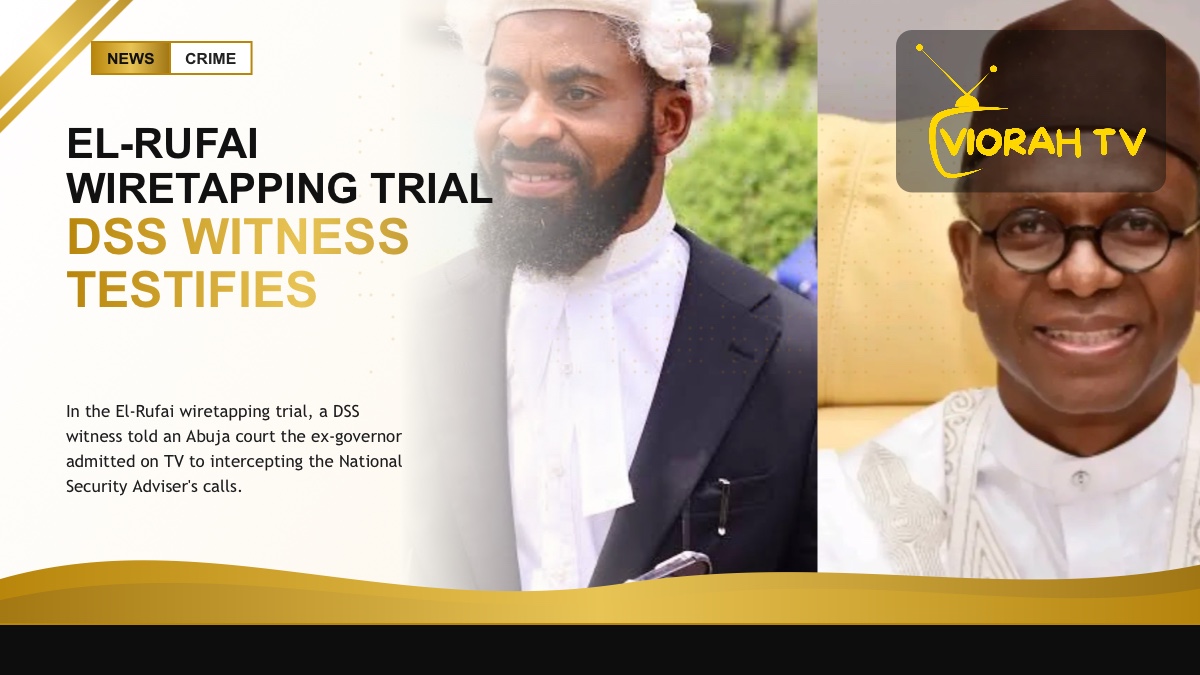
What the El-Rufai trial witness said
The witness, Deji Adeyanju, told the court he appeared on the same television programme on which El-Rufai allegedly made the remarks, and said the former governor stated that he and others listened to the conversations of the National Security Adviser. Adeyanju, the second prosecution witness, gave his account as the court admitted related evidence in the case.
The charges
The DSS filed a multi-count charge alleging that El-Rufai, during a televised interview, admitted that he and associates unlawfully intercepted the phone communications of the National Security Adviser. The prosecution frames this as a breach of national cybercrime law. The defence has contested the case, and the allegations remain to be tested fully before the court reaches any verdict.
A politically charged case
The trial carries political weight given El-Rufai’s prominence and his shifting alignments in national politics. Cases that pit a high-profile former governor against the security services tend to attract intense scrutiny. Viorah TV is reporting the testimony and charges as presented in court, without endorsing either side’s account, and notes that an allegation is not a finding of guilt.
What comes next
The matter was adjourned for the continuation of trial, with further testimony expected. As proceedings advance, the court will weigh the evidence and the defence’s response before any judgment. Legal observers say the case could set markers for how televised admissions and the Cybercrimes Act are treated in court, beyond the immediate political stakes.
A high-stakes legal test
El-Rufai is a prominent and often polarising figure in Nigerian politics, known for a long career in government and for sharp interventions that keep him in the headlines. A trial in which the security services accuse a former governor of intercepting the communications of the National Security Adviser is unusual and carries significant weight, touching on national security, the limits of official conduct and the reach of cybercrime law. Legal observers note that cases built partly on televised statements raise interesting questions about how public admissions are treated as evidence and how they interact with the right to a fair trial. The political dimension is impossible to ignore, given the prominence of those involved and the shifting alliances that characterise Nigerian politics. For the public, the proceedings offer a rare window into disputes that usually play out behind closed doors. As with any criminal matter, the charges must be proven, and the defence will have its opportunity to respond. The eventual outcome could influence how similar allegations are handled in future, beyond the immediate fortunes of the individuals at the centre of the case.
For now, the development is the witness testimony and the admission of evidence. Viorah TV will continue to follow the El-Rufai wiretapping trial and report the court’s decisions.

