Table of Contents
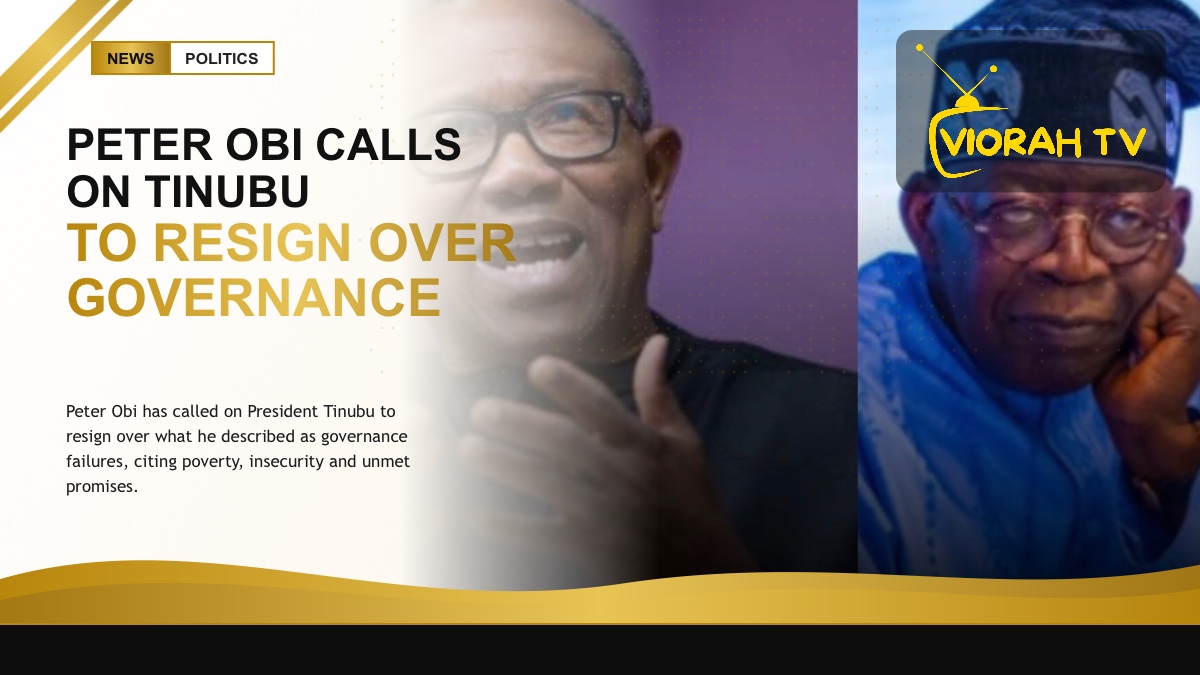
Peter Obi has called on President Bola Tinubu to resign, citing what he described as failures in governance ranging from deepening poverty to worsening insecurity. The presidency has rejected the call.
What Peter Obi said
Obi, a former Anambra State governor and a leading opposition figure, urged the President to consider stepping down, comparing the move to instances abroad where leaders have resigned after acknowledging political responsibility. He argued that such a step would help entrench a culture of accountability.
He linked his call to economic hardship and security concerns, pointing to rising numbers of Nigerians living below the poverty line and persistent challenges across infrastructure and anti-corruption efforts. Obi framed public office as a sacred trust rather than an entitlement.
The presidency responds
The presidency rejected the call, dismissing the demand for Tinubu’s resignation. Government allies have consistently defended the administration’s record, pointing to reforms they argue are designed to stabilise the economy over the long term.
The exchange reflects the sharp divide between the government and the opposition as political activity intensifies ahead of the next general election cycle. Both sides have sought to shape public opinion around the state of the nation.
A heated political climate
Calls and counter-calls of this nature have become a regular feature of Nigeria’s political conversation. Opposition figures frequently challenge the government on the economy and security, while officials insist that difficult reforms take time to bear fruit.
Obi, who has remained a prominent voice since the last presidential race, retains a significant following, particularly among younger Nigerians. His interventions tend to attract wide attention and spirited debate online and offline.
The issues at stake
At the heart of the dispute are bread-and-butter concerns: the cost of living, the value of incomes, the reliability of power supply and the safety of communities. These are the metrics by which many citizens judge any administration.
Supporters of the government argue that reforms, though painful, are necessary to fix long-standing structural problems. Critics counter that ordinary Nigerians are bearing too heavy a burden in the meantime.
What happens next
Resignation calls rarely produce immediate change, but they help define the political battle lines that will shape future contests. The latest intervention adds to an increasingly vocal opposition narrative centred on accountability.
Public reaction
The intervention drew strong responses across social media, with supporters of the opposition amplifying the message and government backers dismissing it as political theatre. Such divisions have become a familiar feature of national debate.
Civil society voices have used the moment to renew calls for greater accountability and transparency in governance, regardless of party. They argue that the focus should remain on improving living conditions and security for ordinary citizens.
The road to 2027
As the political calendar advances, exchanges of this kind are likely to grow more frequent. Each statement helps shape the narrative both sides will carry into the next election, making the contest for public opinion an early and important battleground.
Viorah TV presents this story without taking sides, reporting the claims and the response as stated. As the political season unfolds, we will continue to cover developments fairly and factually.

