Table of Contents
A Saudi Arabia food aid project worth more than $1.5 million has begun in Nigeria, aiming to support vulnerable households hit by displacement, insecurity and hardship. The scheme will distribute 24,302 food baskets to communities across five states, in a partnership between the Kingdom and Nigerian emergency authorities.
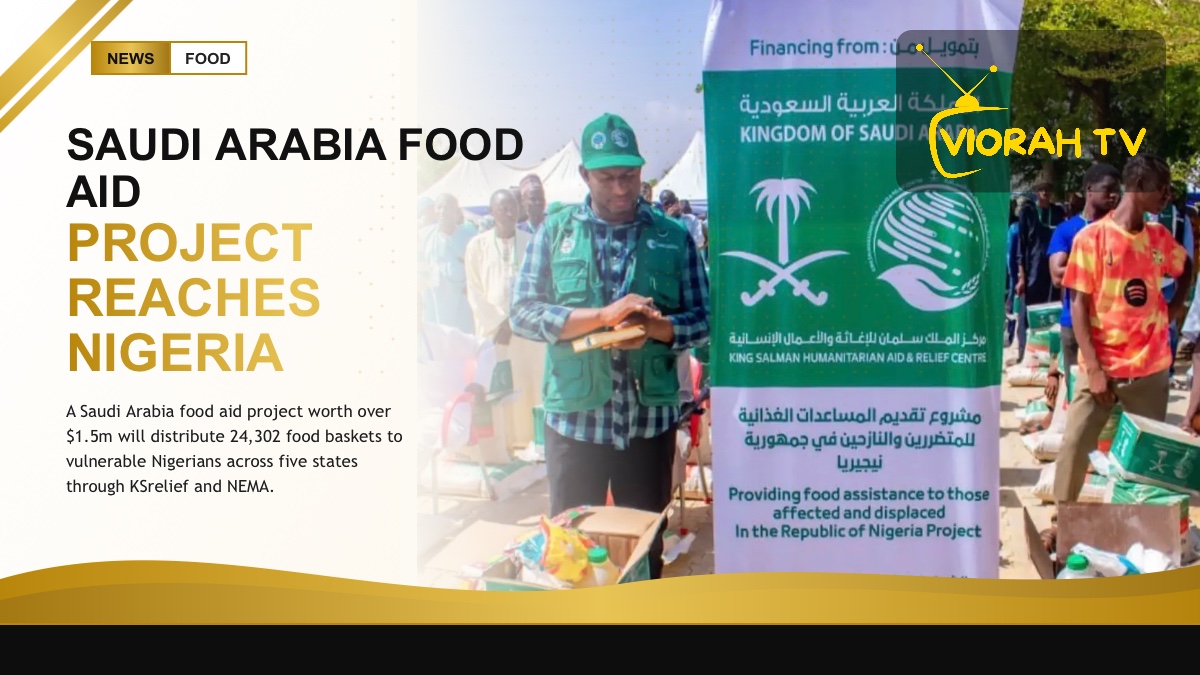
Inside the Saudi Arabia food aid project
The intervention is run by the King Salman Humanitarian Aid and Relief Centre, known as KSrelief, working with Nigeria’s National Emergency Management Agency, NEMA. Each food basket weighs about 60 kilograms and contains essential staples, including rice, cooking oil, white beans, salt and other commodities that families need most.
Valued at over $1.5 million, the project is expected to benefit more than 145,000 people in communities facing food insecurity. The food baskets will be shared across five intervention states: Yobe, Benue, Anambra, Kebbi and Taraba. The flag-off ceremony was held in Damaturu, the Yobe State capital, on June 18.
Reaching communities in need
The chosen states reflect areas where insecurity, displacement and economic pressure have left many households struggling to put food on the table. From the north-east, where conflict has uprooted communities, to other regions facing hardship, the aid targets people for whom a basket of staples can make a meaningful difference.
NEMA officials flagged off the distribution, underscoring the role of partnerships in responding to humanitarian needs. For agencies stretched by repeated emergencies, support from international partners helps extend relief to more families than domestic resources alone might reach.
Why food aid matters now
Nigeria is grappling with high food prices and persistent inflation that have pushed basic meals out of reach for many. Insecurity in parts of the country has disrupted farming, while displacement has separated families from their land and livelihoods. In that context, food assistance addresses an immediate and urgent need.
Saudi Arabia, through KSrelief, has carried out relief interventions in many countries, presenting them as part of its humanitarian outreach. The Nigeria project adds to a record of food and emergency support aimed at easing the suffering of people affected by crises around the world, and it deepens humanitarian ties between Riyadh and Abuja.
Humanitarian experts note that food baskets meet pressing short-term needs but do not, on their own, solve the deeper causes of hunger. Lasting food security depends on peace, stable prices, support for farmers and functioning markets. Aid buys time and relief, while the longer work of rebuilding livelihoods continues.
Still, for the families receiving the baskets, the help is concrete and immediate. A 60-kilogram supply of staples can carry a household through difficult weeks and ease the daily anxiety of finding the next meal.
The distribution is being rolled out state by state, with NEMA overseeing the logistics of moving and sharing the baskets to ensure they reach the intended households. Officials say transparency in targeting the most vulnerable is central to the exercise.
The partnership between NEMA and KSrelief highlights how international cooperation can supplement national efforts to protect the most vulnerable as Nigeria works through a challenging period for food and security.

