Table of Contents
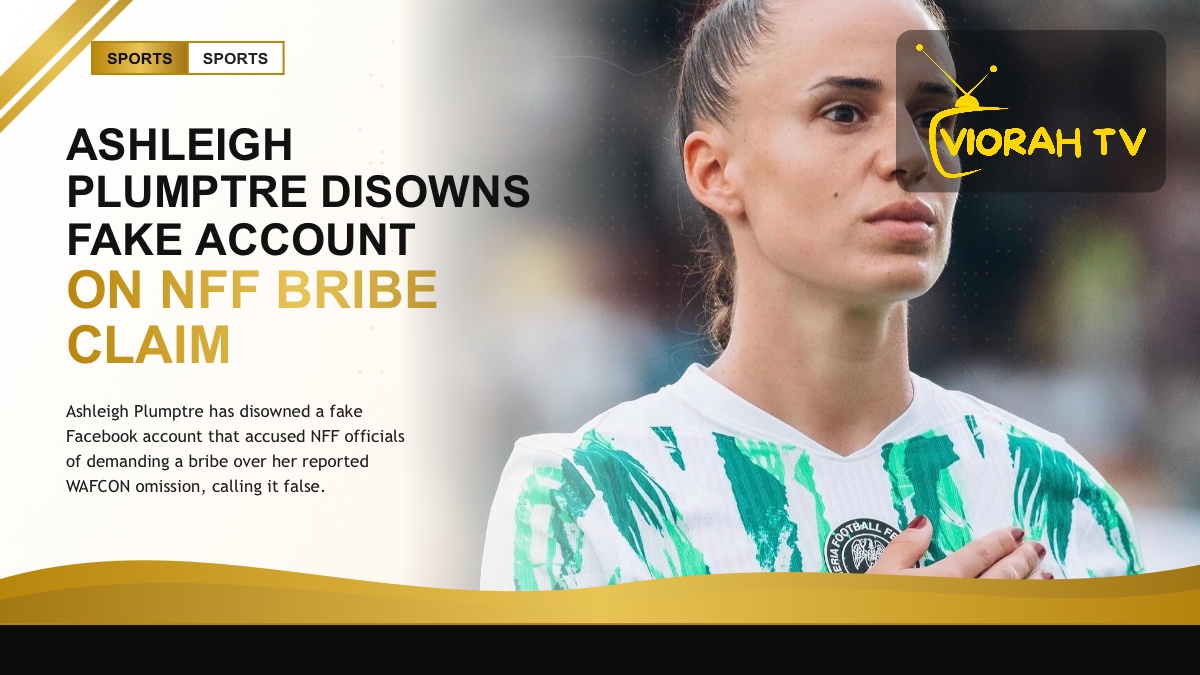
Ashleigh Plumptre has disowned a fake Facebook account that used her name to accuse Nigeria Football Federation (NFF) officials of demanding a bribe. The Super Falcons defender said the impersonating page does not belong to her and described the claims circulating online as false.
What the fake account claimed
In a post that spread quickly across social media, the impersonating account claimed Plumptre had been dropped from the Super Falcons’ squad list for the 2026 Women’s Africa Cup of Nations (WAFCON) because of “corrupt officials who demanded something” from her. The post framed her supposed exclusion as the result of a bribery demand, a serious allegation against the federation.
The story gained traction because Plumptre is one of the team’s most recognisable defenders, and any suggestion of corruption around national team selection draws immediate attention from fans and the media. Within hours, the screenshots had been shared thousands of times, with some users treating the post as genuine before the player herself stepped in to set the record straight.
How Ashleigh Plumptre responded
The defender moved to set the record straight on her official Instagram page, which has more than 130,000 followers. She distanced herself from the Facebook account and said the impersonation had been a recurring problem. “I’m currently contacting someone to help me take these accounts down,” she said, adding that the fake pages had been operating for well over a year.
Plumptre stressed that she does not run a Facebook account, and urged the public to treat posts attributed to her there as fabricated. Her statement was echoed by several Nigerian outlets that flagged the original claim as disinformation rather than a genuine accusation from the player.
The NFF’s reaction
The Nigeria Football Federation also rejected the reports, describing them as entirely false. The federation noted that no official squad list for the tournament had been submitted by the coaching crew, meaning claims that Plumptre had been deliberately omitted had no basis. NFF Director of Competitions Ruth David said the defender had repeatedly warned that she does not operate a Facebook account, and called on the media to verify reports before publishing.
Why it matters
The episode highlights how quickly false information can spread around high-profile sports figures, especially ahead of a major tournament like WAFCON. Impersonation accounts can damage reputations on both sides, casting unfounded suspicion on innocent administrators while putting damaging words in an athlete’s mouth that she never actually said.
For the Super Falcons, who remain among the favourites in African women’s football, the priority is keeping focus on preparation rather than online controversy. Plumptre, an England-born defender who switched her international allegiance to Nigeria and has become a regular in the team’s backline, will be hoping the clarification puts the matter to rest so attention can return to the pitch. Both the player and the federation have urged fans to rely only on verified channels for squad news in the build-up to the competition, warning that fabricated posts can spread faster than the truth.

