Table of Contents
Lagos State has signed a strategic framework with the Gas Aggregation Company Nigeria (GACN) to secure gas supply for its planned six gigawatts electricity target, equal to 6,000 megawatts for the state. The agreement aims to guarantee fuel for power projects at well below the prevailing market rate.
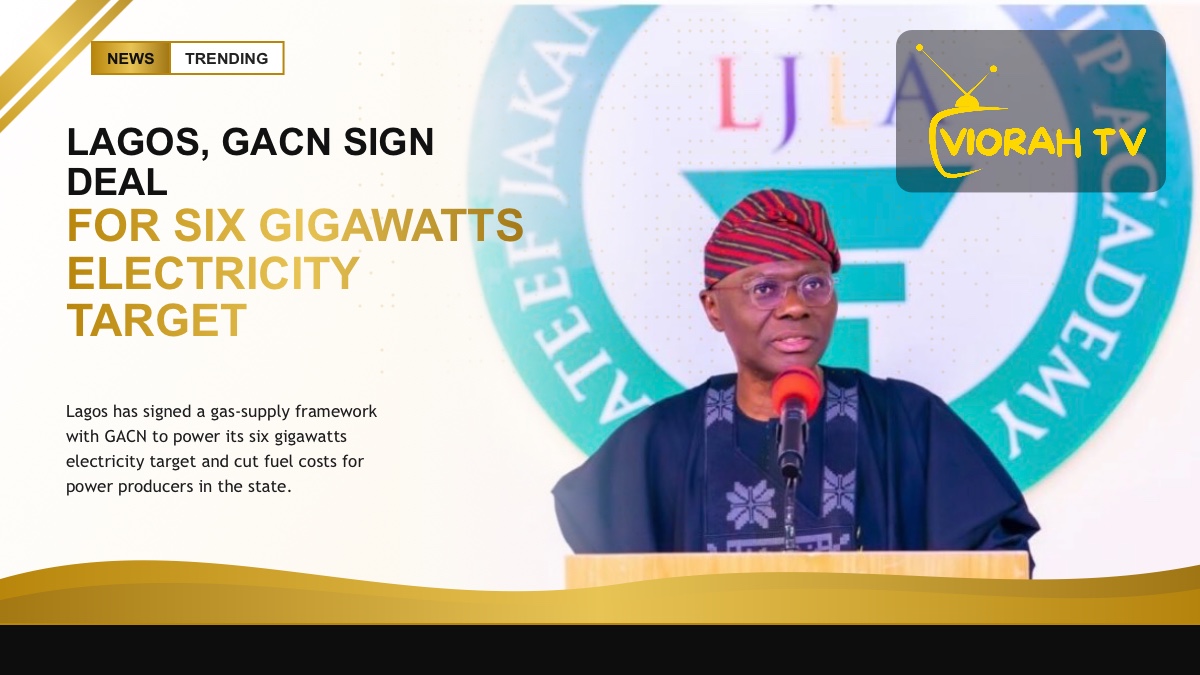
Officials described the memorandum of understanding as a landmark step toward stable, affordable power in Nigeria’s commercial capital. The deal was sealed at Lakowe Resort in Ibeju-Lekki, where Governor Babajide Sanwo-Olu was represented by his deputy, Dr. Kadri Obafemi Hamzat.
What the six gigawatts electricity deal covers
Under the framework, GACN will help aggregate and guarantee gas supply for independent power producers (IPPs) operating in Lagos. The state government said the arrangement removes one of the biggest obstacles facing investors: unreliable and expensive fuel for gas-fired plants.
Crucially, officials said the deal would deliver gas to power generators at less than half the prevailing market gas-to-power price. Cheaper, dependable fuel lowers the cost of generation, which the state hopes will translate into steadier supply and more bearable tariffs for homes and businesses over time.
Why Lagos needs more power
Lagos says its energy requirement already exceeds six gigawatts, far above what it currently draws from the national grid. The shortfall forces millions of residents and businesses to rely on costly diesel and petrol generators, adding to the price of nearly everything produced in the city.
The push follows Nigeria’s Electricity Act, which allows states to build and regulate their own power markets rather than depend solely on the national system. Lagos has positioned itself as a frontrunner, setting up a state electricity framework and courting private investors to close the supply gap.
Investors and stakeholders charged to act
At the signing, the government urged investors, gas suppliers and power developers to collaborate so the six gigawatts electricity target can be met within the state’s timeline. Officials framed reliable power as the foundation for jobs, manufacturing and the wider Lagos economy.
Stakeholders welcomed the gas-supply guarantee as a practical fix to a long-standing bottleneck. Many IPP projects in the past stalled not for lack of plants but for lack of affordable gas, leaving generating capacity idle while consumers stayed in the dark.
Background on Nigeria’s power struggle
Nigeria’s national grid has long struggled to deliver steady supply, often generating far less than the country needs and collapsing several times a year. Generation has hovered around 4,000 to 5,000 megawatts nationally, a figure dwarfed by demand from a population of more than 200 million people.
Gas shortages, ageing equipment and funding gaps across the power chain have kept output low. By securing its own gas supply, Lagos is betting that it can sidestep some of those national bottlenecks and build a more dependable market within its borders, a model other states are watching closely.
What it means for residents
For ordinary Lagosians, the promise is fewer blackouts and, eventually, lower energy bills if the new supply comes online as planned. Reliable electricity would also ease pressure on small businesses that spend heavily on fuel just to stay open each day.
Delivery, however, will depend on how quickly the gas-to-power infrastructure is built and how firmly the pricing terms hold. The state says it will track progress closely, but residents will judge the six gigawatts electricity plan by what reaches their homes, not by the documents signed at the ceremony.

