Table of Contents
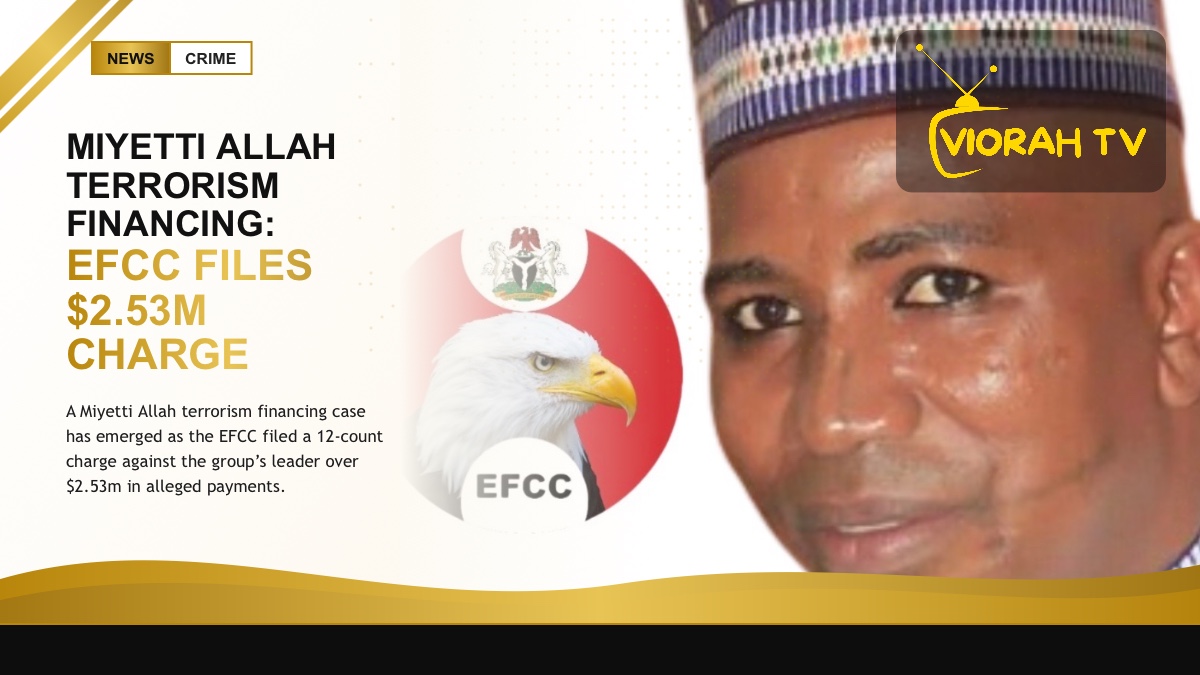
A Miyetti Allah terrorism financing case has come into focus after the EFCC filed a 12-count charge against the group’s national leader over $2.53 million in alleged payments.
The Gist
- EFCC files 12-count terrorism financing charge
- Case targets Miyetti Allah national leader
- Alleged $2.53m in suspect payments
The commission is set to arraign Bello Abdullahi Bodejo, national president of Miyetti Allah Kautal Hore. He is expected to take his plea before the Federal High Court in Abuja.
What the Miyetti Allah terrorism financing charge alleges
The EFCC says it filed the charge in June 2026 under Nigeria’s money laundering laws. The case centres on alleged cash payments totalling $2.53 million.
Investigators list a series of payments made between 2022 and 2024, ranging from $100,000 to $980,000. They say the funds were moved in physical cash, outside any bank.
The money allegedly came from a former state accountant-general. The commission frames the transfers as money laundering and terrorism financing.
How the case reached court
Bodejo was arrested earlier in 2026 by the Department of State Services. He was later transferred to the EFCC for interrogation.
The arrest reportedly came shortly after a political rally in the North-East. The matter then moved toward formal charges in Abuja.
Presumption of innocence
At this stage, the allegations are untested and the accused has not entered a plea. Under Nigerian law, every defendant is presumed innocent until proven guilty.
No public response from the group has been confirmed in the reports. The prosecution will need to establish its case in court.
Why the case matters
Terrorism financing charges are among the most serious in Nigeria’s legal system. They target the money that allegedly keeps violent networks running.
The case also touches sensitive questions around herder groups and security in Nigeria. Observers say it should be judged on evidence, not on identity or politics.
A sensitive case in a tense climate
The case lands against a backdrop of long-running debate over herder-farmer clashes. Any prosecution touching such groups is bound to draw strong reactions on all sides.
Legal observers stress the importance of keeping the focus on evidence. The charge sheet lists specific payments and dates that the prosecution will have to prove.
Rights advocates note that an accused person’s associations are not, by themselves, a crime. Guilt, they say, must be established in court, not in public opinion.
The defence is expected to challenge both the evidence and how it was gathered. Such cases often turn on the paper trail behind alleged cash transfers.
Security analysts say successful terrorism-financing prosecutions are rare but significant. They can disrupt the flow of money that allegedly sustains violence.
For now, all eyes are on the arraignment and the plea to come. The outcome could shape how similar cases are handled in future.
What to watch next
The arraignment will be the first real test of the prosecution’s case. The plea entered will set the direction for the proceedings that follow.
Analysts say the volume of documentary evidence could make the trial lengthy. Cash-based allegations are notoriously hard to trace and prove.
Until a court rules, commentators have urged restraint in public discussion. Speculation, they warn, helps neither justice nor public order.
For now, attention turns to the arraignment and the plea. The Miyetti Allah terrorism financing case is likely to be closely watched in the months ahead.
Source: EFCC

