Table of Contents
Cape Verde have reached the World Cup knockout stage, and the milestone carries a clear Nigerian echo. The Blue Sharks now sit alongside the Super Eagles and Ghana as African sides to advance on their World Cup debut.
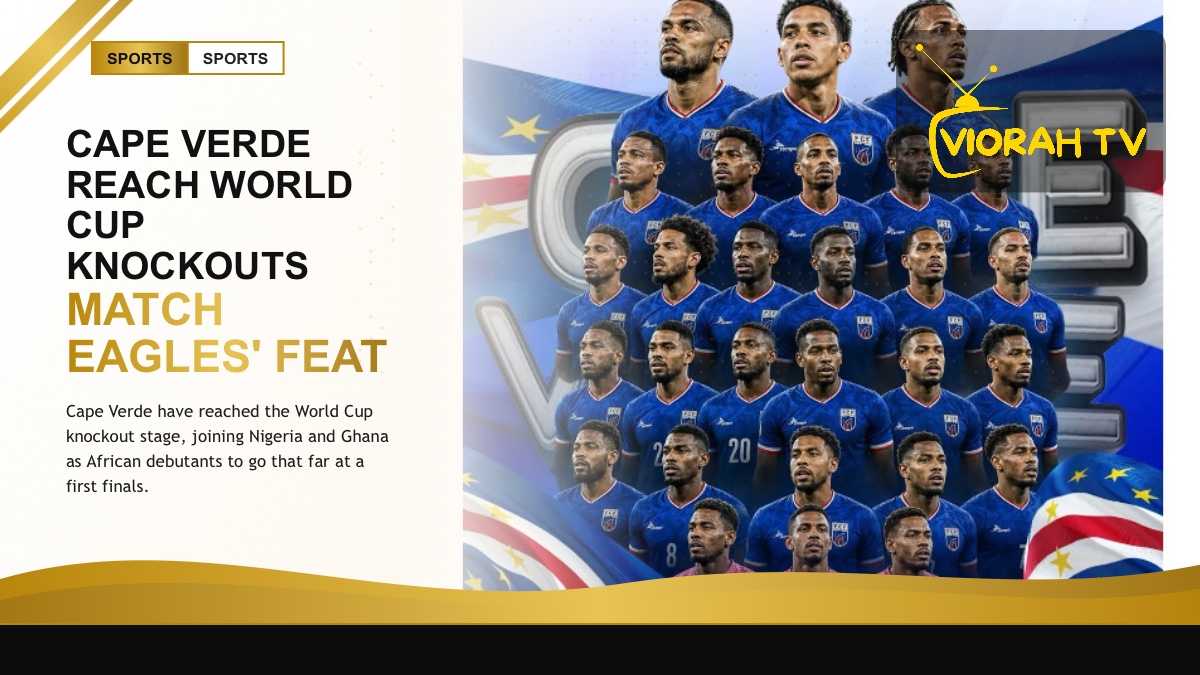
The Gist
- Cape Verde reach World Cup knockout stage
- Joins Nigeria and Ghana as African debutants
- Milestone echoes Super Eagles’ feat
The islanders sealed their place after a goalless draw with Saudi Arabia in their final group game on Friday. It made them the smallest nation by population ever to reach the knockout rounds of a men’s World Cup.
How the Cape Verde run mirrors Nigeria
Nigerians have seen this script before. The Super Eagles famously topped their group on debut at USA 1994 before falling to Italy in the round of 16.
Ghana did something similar in 2006, reaching the second round at their first finals. The Blue Sharks have now joined that small club of African debutants who refused to be overawed.
For a country of just over half a million people, the achievement is staggering. It also underlines how far African football has spread beyond its traditional powers.
A record built on resilience
The islanders became only the third African nation to avoid defeat across its first three World Cup matches, matching the early runs of Senegal and Cameroon.
Their campaign was built on organisation, sharp counter-attacks and a tight defence that frustrated bigger names. They conceded little and made every chance count.
The squad leans heavily on players from the diaspora, many raised in Europe, who chose to represent their parents’ homeland. That model has lessons for football nations across the continent.
What it means for African football
The 48-team World Cup gave more African nations a seat at the table, and smaller sides have seized the moment. Cape Verde are the clearest proof yet.
Their rise challenges the idea that only the continent’s giants can compete deep into the tournament. Identity, planning and unity have carried them past richer rivals.
For coaches across Africa, the message is simple: a clear system and a committed group can outperform raw reputation.
Why it stings and inspires Nigeria
There is a bittersweet edge for Nigerian fans. The Super Eagles missed out on the 2026 finals, leaving supporters to watch smaller nations seize the spotlight.
Yet the story is also a source of pride for the continent. It proves that belief and structure can lift a tiny country onto the world stage.
Many in Lagos and Abuja have praised the islanders while urging Nigeria’s federation to rebuild with the same clarity of purpose.
What comes next
Cape Verde now turn their attention to the knockout rounds, where tougher opponents await. Few will fancy their chances, but few fancied them this far either.
For Nigerian observers, the run is a reminder that the World Cup rewards courage as much as pedigree. The Blue Sharks have written a chapter the whole continent can celebrate.
Lessons for the Super Eagles
For Nigeria, the lesson is less about envy and more about method. The islanders planned for years, blended diaspora talent and trusted a clear identity.
Analysts say the Super Eagles, rich in stars, must match that structure to avoid more painful absences from football’s biggest stage.
Rebuilding now, they argue, could turn frustration into a stronger return next time.
Source: FIFA