Table of Contents
The Super Eagles are Nigeria’s senior men’s national football team, best known as three-time Africa Cup of Nations champions, 1996 Olympic gold medallists and one of the most decorated sides in African football. Governed by the Nigeria Football Federation (NFF) and instantly recognisable in green and white, the team has produced generations of stars, six World Cup campaigns and a youth pipeline that ranks among the most successful on the continent.
Key Facts
- Nigeria’s national team played its first international in 1949, beating Sierra Leone 2–0 in Freetown.
- Three-time Africa Cup of Nations winners: 1980, 1994 and 2013.
- First African nation to win Olympic football gold, at Atlanta 1996.
- Six FIFA World Cup appearances: 1994, 1998, 2002, 2010, 2014 and 2018.
| Team Snapshot | |
|---|---|
| Team Name | Nigeria national football team |
| Nickname | Super Eagles |
| Founded | 1949 (first international match) |
| Years in Operation | 0 |
| Governing Body | Nigeria Football Federation (NFF) |
| Confederation | CAF (Africa); WAFU (West Africa) |
| Home Stadium | Moshood Abiola National Stadium, Abuja |
| Head Coach | Eric Chelle |
| Captain | William Troost-Ekong |
| Country | 🇳🇬 Nigeria |
| FIFA Code | NGA |
| Most Caps | Ahmed Musa (record holder, surpassed Vincent Enyeama’s 101) |
| All-Time Top Scorer | Rashidi Yekini (37 goals) |
| Estimated Squad Value | €170–€280 million (as of 2026, reported) |
Who Are the Super Eagles?
The Super Eagles are the senior men’s national football team of Nigeria, representing the country in continental and global competition. They are run by the Nigeria Football Federation (NFF), affiliated to the Confederation of African Football (CAF) and the West African Football Union (WAFU), and they play their major home fixtures at the Moshood Abiola National Stadium in Abuja, with other big games staged at venues such as the Godswill Akpabio International Stadium in Uyo.
For decades the team has been one of the heartbeats of Nigerian public life. Major matches stop the country, fill viewing centres and unite a nation of more than 200 million people across ethnic and regional lines. The Super Eagles are widely regarded as one of Africa’s most talent-rich teams, regularly supplying players to the biggest leagues in Europe and shaping the global image of Nigerian sport.
Super Eagles History: From Red Devils to Green Eagles
Nigeria’s national team traces its roots to the colonial era. The side played its first recognised international in October 1949, defeating Sierra Leone 2–0 in Freetown while Nigeria was still a British colony. In those early years the team was nicknamed the “Red Devils,” a reference to the red shirts they wore before independence in 1960.
After independence the team adopted green and white, the national colours, and became known as the “Green Eagles.” That identity carried Nigeria through its first major successes, including a maiden Africa Cup of Nations title on home soil in 1980. The famous “Super Eagles” name came later: though the side was still officially the Green Eagles at the 1988 Africa Cup of Nations, the new nickname was adopted at a post-tournament reception and has defined the team ever since.
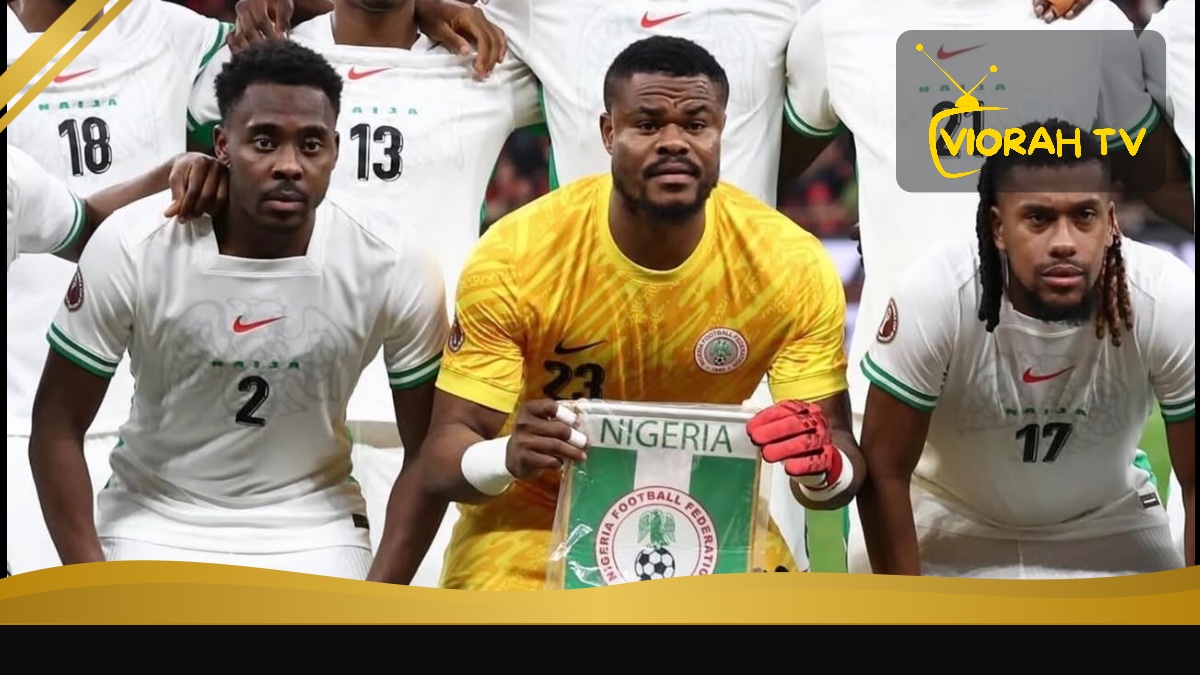
The Super Eagles’ Golden Era
The 1990s are remembered as the golden generation of Nigerian football. A squad packed with talents such as Jay-Jay Okocha, Nwankwo Kanu, Rashidi Yekini, Daniel Amokachi, Sunday Oliseh and Finidi George announced itself to the world. In 1994 the team won the Africa Cup of Nations in Tunisia and, that same year, made a thrilling debut at the FIFA World Cup in the United States, topping a group that included Argentina before a narrow round-of-16 exit to Italy.
Two years later came the crowning moment. At the 1996 Atlanta Olympics, Nigeria’s under-23 side — drawn from the same rich talent pool — beat Brazil and then Argentina to win the men’s football gold medal, becoming the first African nation to do so. The achievement remains a landmark not only for Nigeria but for the whole continent, proof that African football could conquer the very best.
Honours and Major Titles
Across more than seven decades, the Super Eagles have built one of the strongest trophy cabinets in African football, spanning senior, Olympic and youth levels. Their honours cut across every stage of the game and help explain why Nigeria is consistently ranked among the continent’s most successful footballing nations.
Africa Cup of Nations
Nigeria are three-time Africa Cup of Nations champions, lifting the trophy in 1980, 1994 and 2013. The 1980 win, on home soil under coach Otto Glória, delivered the country’s first continental crown. The 2013 triumph in South Africa, led by Stephen Keshi and inspired by Sunday Mba’s winning goal in the final against Burkina Faso, made Keshi only the second man to win the AFCON as both player and coach. Nigeria have also finished as runners-up several times and are famous for a string of third-place finishes, including bronze at the 2023 and 2025 editions.
Olympic Gold and World Cup Appearances
The 1996 Olympic gold remains Nigeria’s signature achievement on the world stage, while a silver medal followed at Beijing 2008. At senior level the Super Eagles have reached six FIFA World Cups — 1994, 1998, 2002, 2010, 2014 and 2018 — advancing to the round of 16 on three occasions (1994, 1998 and 2014). Nigeria’s youth teams have been even more prolific, winning a record five FIFA U-17 World Cup titles, a pipeline that has long fed the senior side with fresh talent.
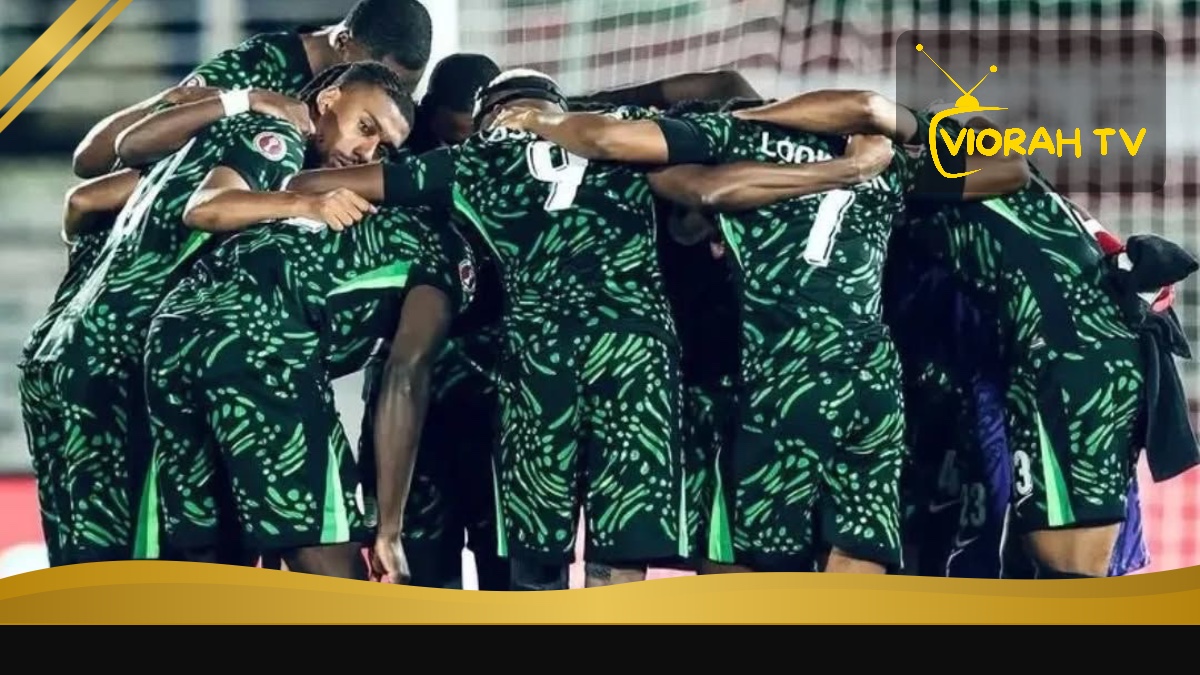
Super Eagles Legends and Record-Holders
The team’s history is written through its icons. Goalkeeper Vincent Enyeama, who captained Nigeria to the 2013 AFCON title and starred at the 2014 World Cup, won 101 caps before forward Ahmed Musa eventually overtook him as the country’s most-capped player. Rashidi Yekini, scorer of Nigeria’s first-ever World Cup goal in 1994, remains the all-time leading marksman with 37 goals, a record modern striker Victor Osimhen has been closing in on. Other greats include Jay-Jay Okocha, Nwankwo Kanu, Mikel John Obi, Vincent Enyeama and, in the current era, captain William Troost-Ekong and forward Ademola Lookman, the 2024 CAF Men’s Player of the Year.
Eric Chelle and the Current Super Eagles Era
The Super Eagles are currently coached by Eric Chelle, who was appointed by the NFF in January 2025. Born in Ivory Coast to a French father and a Malian mother, Chelle previously guided Mali to the quarter-finals of the 2023 Africa Cup of Nations. He led Nigeria to a bronze medal at the 2025 AFCON and, in 2026, agreed a renewed long-term arrangement to remain in charge while also overseeing the Olympic-bound U-23 Dream Team. His tenure has come during a transitional period for Nigerian football, with the team rebuilding after missing out on qualification for the 2026 World Cup.
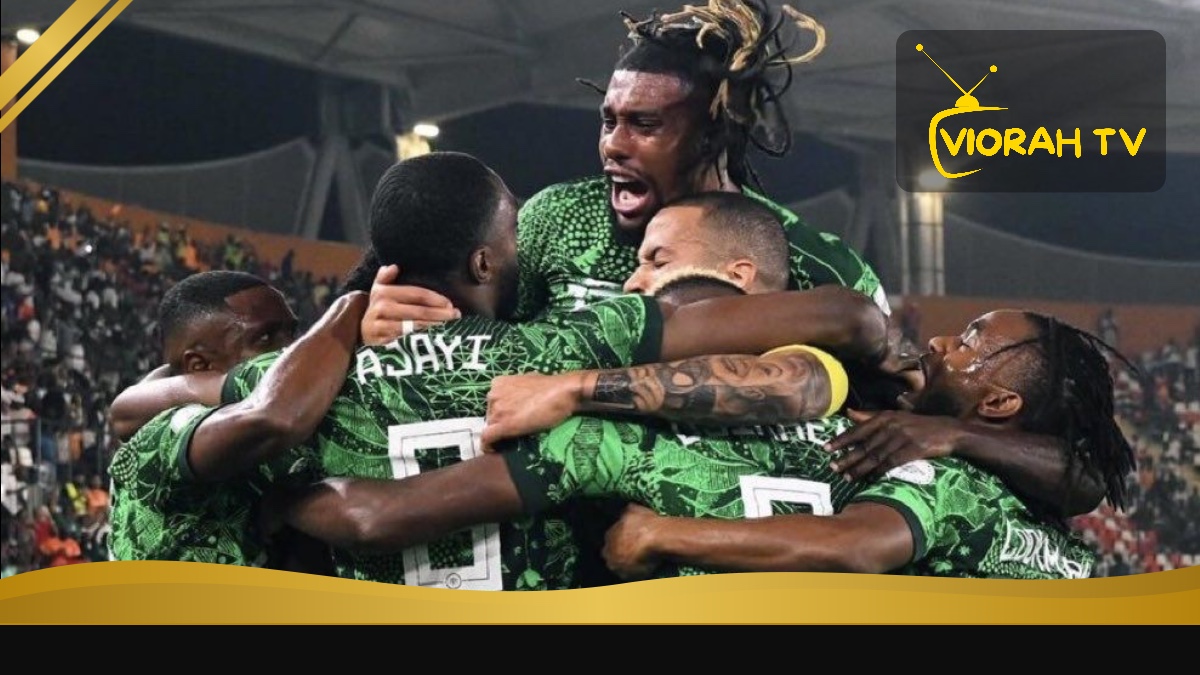
Super Eagles Squad Value
As of 2026, the Super Eagles’ combined squad market value is reportedly estimated at roughly €170 million to €280 million, depending on form and the assessment date, according to tracking platforms such as Transfermarkt. That figure has fluctuated through the season as players’ valuations rose and fell, keeping Nigeria among the most valuable national squads in Africa. The most valuable individual has been striker Victor Osimhen, followed by Ademola Lookman and Calvin Bassey. These figures are market estimates rather than official accounts and should be treated as approximations.
From the Red Devils of 1949 to Atlanta gold and three AFCON crowns, the Super Eagles remain the soaring symbol of Nigerian sport.
— Viorah TV
Controversies
Like many national teams, the Super Eagles have faced periodic off-pitch disputes, most often around the Nigeria Football Federation. These have included recurring reports of delayed bonus and allowance payments to players, occasional pre-tournament stand-offs, and debates over coaching appointments and administrative decisions within the federation. There has also been public discussion around qualification disappointments, including missing the 2022 and 2026 World Cups. Accounts and outcomes have varied by source, with some matters resolved and others contested; Viorah TV reports them only as matters of public record without taking a position.
Frequently Asked Questions
Why are they called the Super Eagles?
The team was nicknamed the “Red Devils” in colonial times and later the “Green Eagles.” The name “Super Eagles” was adopted around the 1988 Africa Cup of Nations and has been used ever since.
How many AFCON titles have the Super Eagles won?
Nigeria have won the Africa Cup of Nations three times, in 1980, 1994 and 2013, and have also finished as runners-up and third-place several times.
Have the Super Eagles won an Olympic gold medal?
Yes. Nigeria won the men’s football gold medal at the 1996 Atlanta Olympics, becoming the first African nation to do so, and added a silver at Beijing 2008.
Who is the current Super Eagles coach?
Eric Chelle, appointed by the NFF in January 2025, is the head coach. He led Nigeria to bronze at the 2025 Africa Cup of Nations.
What is the Super Eagles’ squad value?
The combined squad market value is reportedly estimated at around €170–€280 million, depending on the date, though figures fluctuate and are market estimates rather than official.
Conclusion
The Super Eagles are far more than a football team; they are a national institution that has carried Nigeria’s hopes from the streets of Lagos to the world’s biggest stages. With three AFCON titles, a historic Olympic gold, six World Cup appearances and a conveyor belt of world-class talent, Nigeria’s national side remains one of Africa’s proudest and most influential. As a new generation rebuilds under Eric Chelle, the green and white shirt still stirs the same passion it always has.

