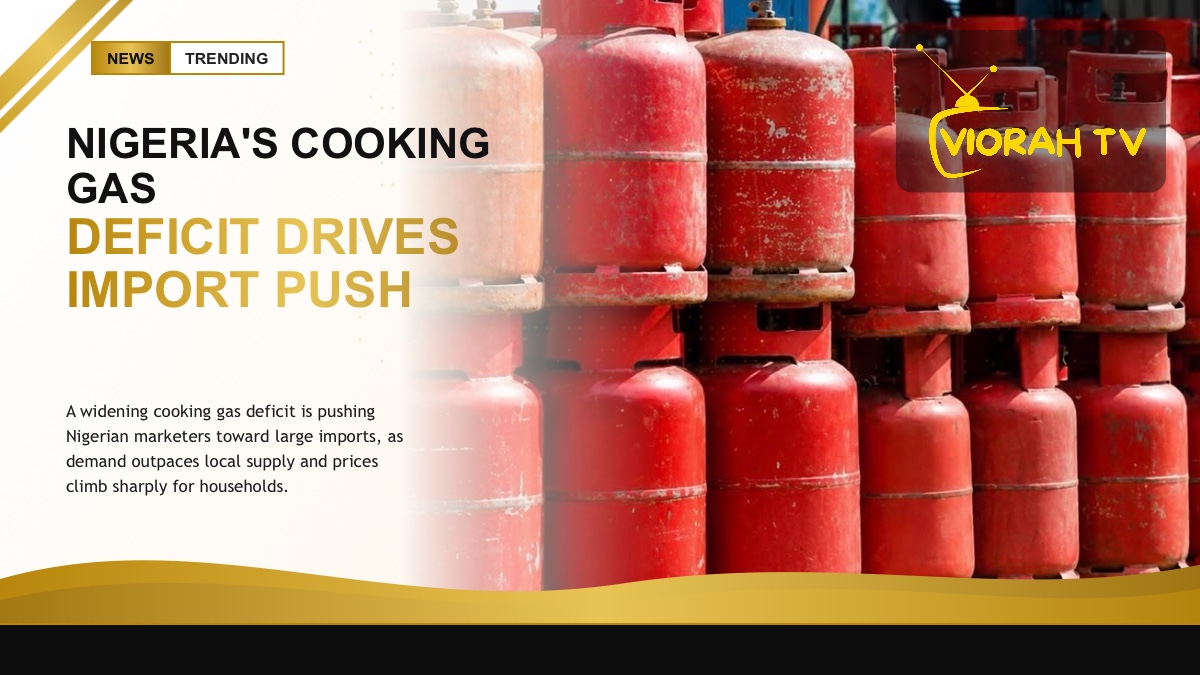
A widening cooking gas deficit is pushing Nigerian marketers toward large-scale imports as local supply struggles to keep up with demand. Households are feeling the strain through sharply higher prices, prompting suppliers to plan fresh imports of liquefied petroleum gas to ease shortages and bring some relief to a market under growing pressure.
The cooking gas supply gap
Demand for cooking gas has climbed steeply, with national consumption rising about 20 percent to roughly 1.8 million tonnes, while local supply is projected at around 1.55 to 1.65 million tonnes. That leaves a sizeable gap of well over 150,000 tonnes between what Nigerians need and what the country produces, a shortfall that has tightened availability and fed directly into rising prices at the retail level.
Prices surge for households
The squeeze has hit ordinary consumers hard. Retail prices in many parts of the country now sit in the range of N1,700 to N2,000 per kilogramme, an increase of more than 80 percent compared with earlier in the year. For families that rely on gas for daily cooking, the jump adds to an already heavy cost-of-living burden and pushes some toward dirtier, cheaper alternatives.
Marketers turn to imports
To bridge the gap, marketers are arranging large imports of LPG, aiming to boost availability and cool prices. Although Nigeria produces gas, domestic supply has at times fallen short of demand, leaving imports as a stopgap. The move highlights a paradox for a gas-rich nation: despite significant reserves, the country still leans on foreign supply to meet the everyday cooking needs of its people.
Why the shortfall persists
The deficit reflects a mix of rising demand, infrastructure constraints and the way domestic gas is allocated between local use and other markets. As more households adopt gas for cooking, consumption has outpaced the supply reaching the domestic market. Closing the gap sustainably will require greater investment in supply, storage and distribution, so that local production reliably serves Nigerian consumers.
A clean-energy concern
High prices risk undermining gains in clean cooking, as cost-conscious families revert to firewood or charcoal with consequences for health and the environment. Cooking gas is widely promoted as a cleaner option, so keeping it affordable matters beyond economics. Stabilising supply and prices is therefore important not only for household budgets but also for the country’s broader clean-energy goals.
A gas-rich nation’s paradox
Nigeria holds some of the world’s largest natural gas reserves, which makes its reliance on imports to meet domestic cooking-gas demand especially striking. For years, policymakers have spoken of deepening the use of gas at home, both to cut costs and to promote cleaner cooking, yet supply to the local market has often lagged behind ambition. Bottlenecks in production allocation, storage and distribution have limited how much reaches households. Closing the gap will require investment across the value chain and policies that prioritise domestic supply. If achieved, a steadier and more affordable cooking-gas market could ease pressure on families and advance environmental goals at once. For now, the recurring shortfalls underline the distance between Nigeria’s resource wealth and the everyday energy realities faced by millions of its citizens.
For now, imports offer a short-term fix while the underlying supply challenge remains. Viorah TV will continue to track cooking gas prices and the efforts to ease the deficit.

