NNPC and TotalEnergies have extended their methane drone detection deal by 24 months, deepening a partnership aimed at cutting harmful emissions across Nigeria’s oil and gas fields. The agreement keeps a specialised drone-based technology flying over the national oil company’s upstream operations.
How the methane drone technology works
At the heart of the deal is a tool called AUSEA, short for Airborne Ultralight Spectrometer for Environmental Applications. Mounted on a drone, it scans facilities for leaks that might otherwise go unnoticed. TotalEnergies developed the system with France’s National Centre for Scientific Research and the University of Reims.
The technology helps operators identify unaccounted sources of emissions, sharpen their reporting processes and gather data to guide corrective action. It can also estimate how efficiently gas flares are burning, giving engineers a clearer picture of where waste is happening and how to fix it.
Details of the agreement
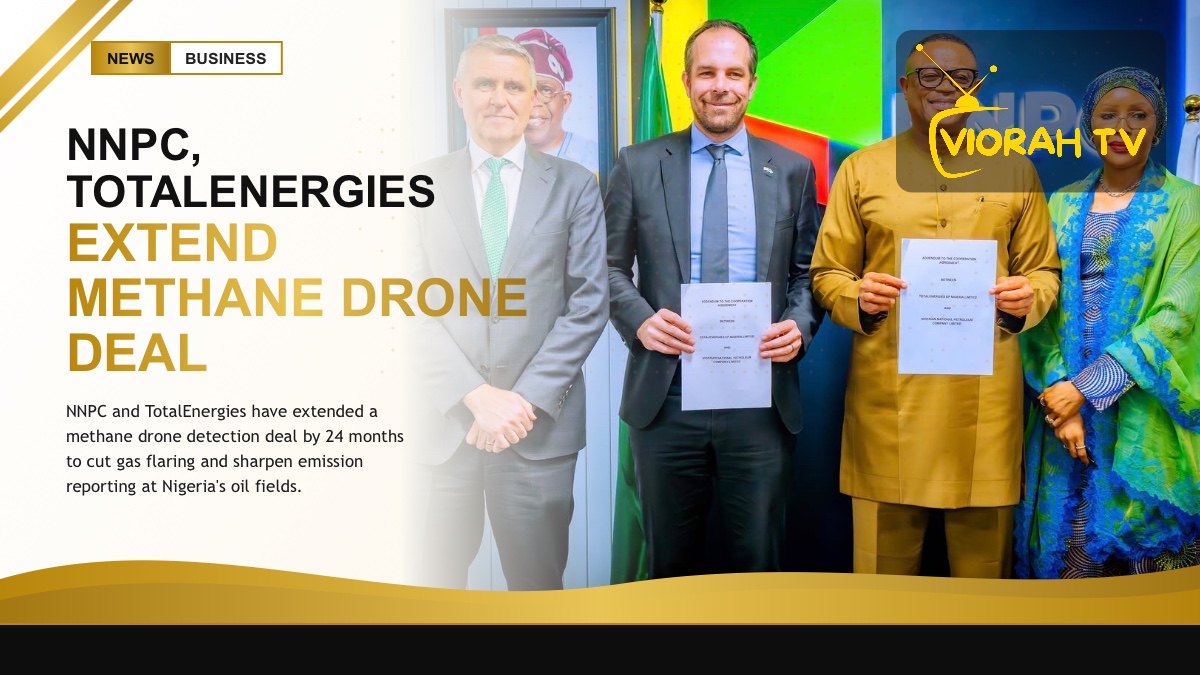
The extension was signed at the NNPC Towers in Abuja by the national oil company’s Executive Vice President for Upstream, Udy Ntia, and the Country Chair and Managing Director of TotalEnergies in Nigeria, Matthieu Bouyer. It builds on an initial agreement first reached in 2023 for the adoption of the AUSEA system.
By renewing for a further two years, the partners signalled confidence that the airborne surveys are delivering useful results. The arrangement spreads the technology across upstream sites, where the bulk of methane leaks and flaring in the sector tend to occur.
Why cutting methane matters
Methane is a potent greenhouse gas, trapping far more heat than carbon dioxide over the short term. Reducing leaks and flaring is therefore one of the fastest ways an oil-producing nation can lower its climate impact. For Nigeria, it also means capturing gas that could be put to productive use rather than simply burned off.
The national oil company says the work supports its gas flare reduction obligations under its Oil and Gas Decarbonisation Charter commitments and its participation in the Oil and Gas Methane Partnership. It is also tied to a stated ambition of reaching near-zero methane emissions by 2030, a target that requires reliable monitoring to be credible.
A test for cleaner production
Nigeria has long struggled with gas flaring, a practice that wastes a valuable resource and pollutes nearby communities. Better detection is a first step, but turning findings into action, by repairing leaks and capturing gas for power or industry, is where the real gains lie. Campaigners will be watching whether the surveys translate into measurable cuts.
For the wider economy, capturing more gas could feed domestic power plants and factories that frequently run short of fuel. If the methane drone surveys help unlock that supply while easing the environmental toll, the partnership could become a model for how Nigeria balances oil revenue with cleaner production in the years ahead.
International pressure on the oil and gas sector to curb methane has grown sharply, with investors and lenders increasingly scrutinising the climate records of producers. By adopting advanced detection tools, Nigeria’s national oil company positions itself to meet tighter global standards and to keep access to financing and markets that now reward cleaner operations.
The renewed deal also deepens a long technical relationship between the two firms, which already partner on several upstream ventures in the country. Officials say sharing expertise on emissions could spill over into other areas of cooperation. For communities living near oil installations, the hope is that fewer leaks and flares will mean cleaner air and a smaller environmental burden over time.

