Table of Contents
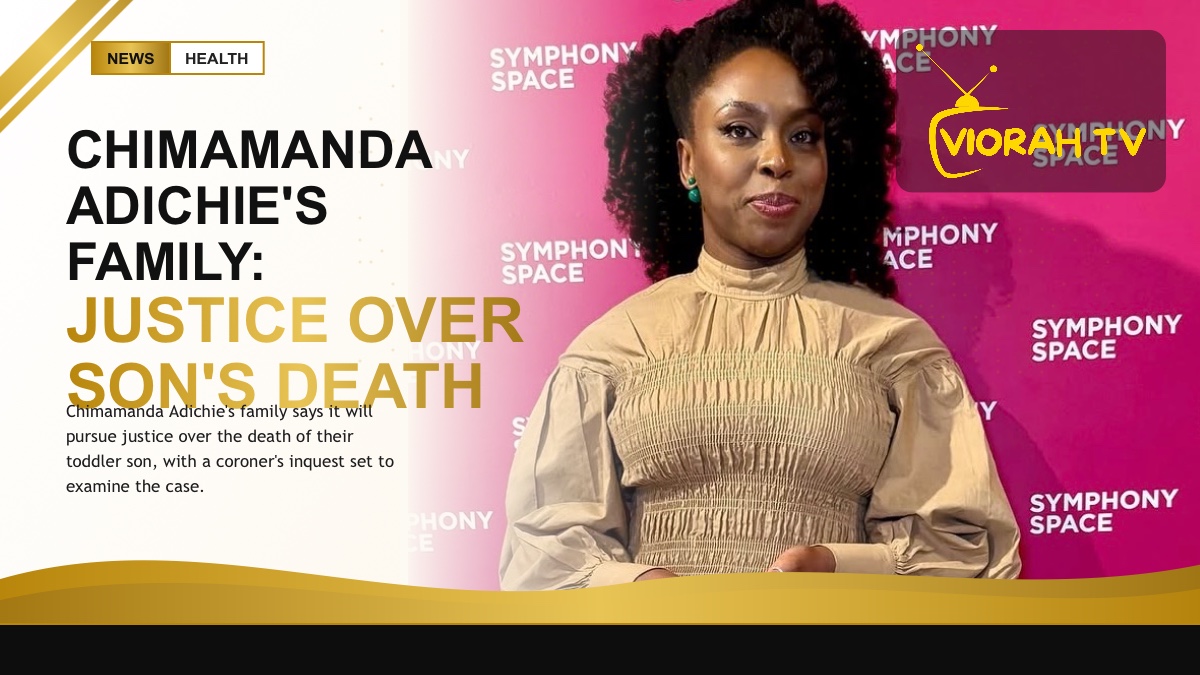
Chimamanda Adichie’s family says it will pursue justice over the death of their young son, a case now heading to a coroner’s inquest in Lagos. The acclaimed author and her husband, Dr. Ivara Esege, have raised concerns about the medical care their toddler received before he died.
Viorah TV is reporting this sensitive matter neutrally. The allegations described below are the family’s account and are yet to be tested at the inquest; no findings of wrongdoing have been established.
What the Chimamanda Adichie family has said
The child, Nkanu Adichie-Esege, was around 21 months old when he died in January 2026 in Lagos. The family says the boy was undergoing procedures at a Lagos hospital, with preparations under way to transfer him abroad for further treatment.
Dr. Ivara Esege is reported to have said the family “will not relent until justice is served.” Adichie has also issued her own public statement setting out the family’s concerns and their intention to seek answers through the proper channels.
The allegations and the inquest
In her account, Adichie alleges that the child suffered a brain injury linked to improper sedation, and she has questioned how the cause of death was recorded. She has also said the family faced difficulties obtaining medical records. The hospital named has not had these claims tested or upheld, and presents its own position through the legal process.
A coroner’s court in Lagos is set to examine the circumstances of the death. An inquest is a fact-finding inquiry rather than a criminal trial; its role is to establish how a death occurred, not to assign criminal guilt. Reports indicate the hospital has sought to challenge aspects of the process.
Why the case draws attention
Chimamanda Adichie is one of Nigeria’s most celebrated writers, known internationally for novels and essays that have shaped global conversations. Because of her profile, the family’s call for accountability has resonated widely and renewed discussion about patient safety and medical record-keeping.
Cases like this often raise broader questions about how hospitals handle adverse outcomes, communicate with families and cooperate with official inquiries. Those questions sit at the centre of the coming inquest, which is expected to hear from relevant parties.
Handling a painful story with care
Viorah TV recognises the grief at the heart of this story and is committed to reporting it with sensitivity. We are not drawing conclusions about responsibility, which is a matter for the coroner and any subsequent legal process to determine.
Wider questions raised
Beyond the specifics of the case, the family’s decision to speak publicly has prompted broader conversations about patient safety, informed consent and the handling of medical records in Nigerian hospitals. Advocates say clear documentation and transparent communication with families are essential whenever an outcome is disputed.
The coroner system exists precisely to examine deaths that raise questions, providing an independent process to establish the facts. Its findings can inform whether further action is warranted, and can also highlight lessons for healthcare providers regardless of where responsibility ultimately lies.
Viorah TV is mindful that a child has died and that grieving parents are at the centre of this story. We will avoid amplifying unverified claims and will report only what is confirmed through the inquest and official channels, allowing the process to run without prejudice to any party.
As the inquest proceeds, the family’s stated goal remains accountability and answers about what happened to their son. Viorah TV will follow the proceedings and report verified developments, keeping its coverage measured and respectful of everyone involved.

