Table of Contents
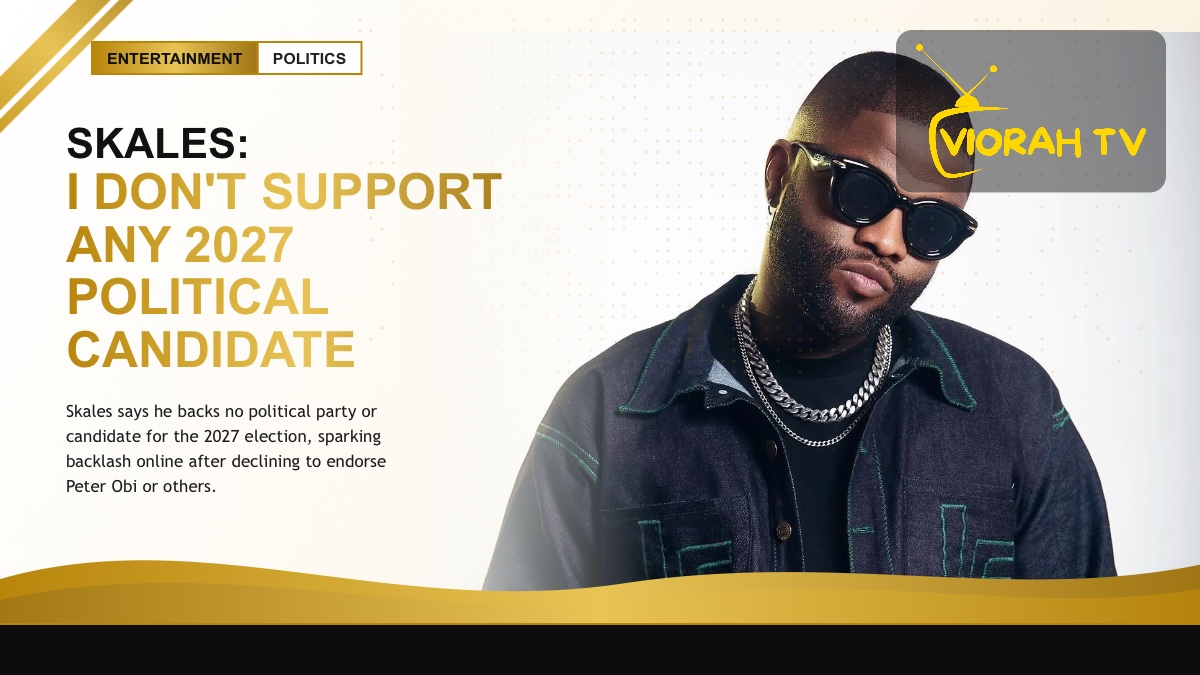
Skales says he does not support any political party or candidate ahead of Nigeria’s 2027 presidential election, a stance that has triggered backlash online. The Afrobeats singer made his position clear after being asked who he would vote for, insisting he has lost faith in the country’s main political options.
How the row started
The conversation began on Sunday, June 21, 2026, when media personality Rufai Oseni asked his followers who they would back in the next presidential race. Skales replied bluntly: “To be honest none!!!” The answer drew immediate criticism, with one user accusing the singer of being part of Nigeria’s problems.
What Skales said in response
Facing a wave of comments, the singer doubled down in a statement on X. “I have seen all the posts targeted at me, and I repeat I do not represent any political party,” he wrote. He added that he supports neither the current leadership nor any of the candidates lining up for the election, and that he would not “settle for lesser evil.”
Skales said he keeps his distance from politics because he believes the major parties have all failed the country. He framed his silence as a refusal to be pressured into an endorsement rather than indifference to Nigeria’s challenges.
Why the reaction was so strong
Much of the criticism appeared to come from supporters of Labour Party figure Peter Obi, whose online base is known for challenging public figures seen as neutral or as backing rival camps. By naming no candidate, the singer drew fire from fans who expected entertainers to take a clear side.
The episode highlights the growing pressure on Nigerian celebrities to declare political allegiances as 2027 approaches. Musicians, actors and influencers command large followings, and campaigns increasingly court their endorsements, making any refusal a story in itself.
A pattern for the singer
This is not the first time he has stirred debate with his opinions. He previously faced criticism for suggesting that young Nigerians should aim to leave the country in search of success, a comment many read as overly pessimistic about life at home.
Celebrities and the 2027 race
Nigerian entertainers have become important players in the country’s politics. Ahead of past elections, several musicians and actors openly campaigned for candidates, performed at rallies or used their platforms to drive voter registration. That visibility means fans increasingly expect their favourite stars to reveal where they stand.
At the same time, taking sides carries risks. Endorsements can alienate parts of an artist’s audience, draw boycott threats or tie a brand to a politician whose fortunes may later fade. Some entertainers have chosen neutrality precisely to protect their commercial appeal across a divided electorate.
Skales appears to fall into that camp, though he insists his refusal is rooted in disappointment rather than strategy. He has urged Nigerians to focus on demanding accountability from whoever wins, rather than on policing the political choices of musicians.
For now, the singer insists his position is settled. He says he will not endorse anyone he does not believe in, even as the demand for celebrity political statements grows louder in the months before the vote.

