Table of Contents
The Sowore remand has triggered a political storm after a Federal High Court in Abuja ordered activist Omoyele Sowore detained in Kuje Correctional Centre, with presidential candidate Peter Obi calling the move a ‘dangerous regression’ for Nigeria’s democracy.
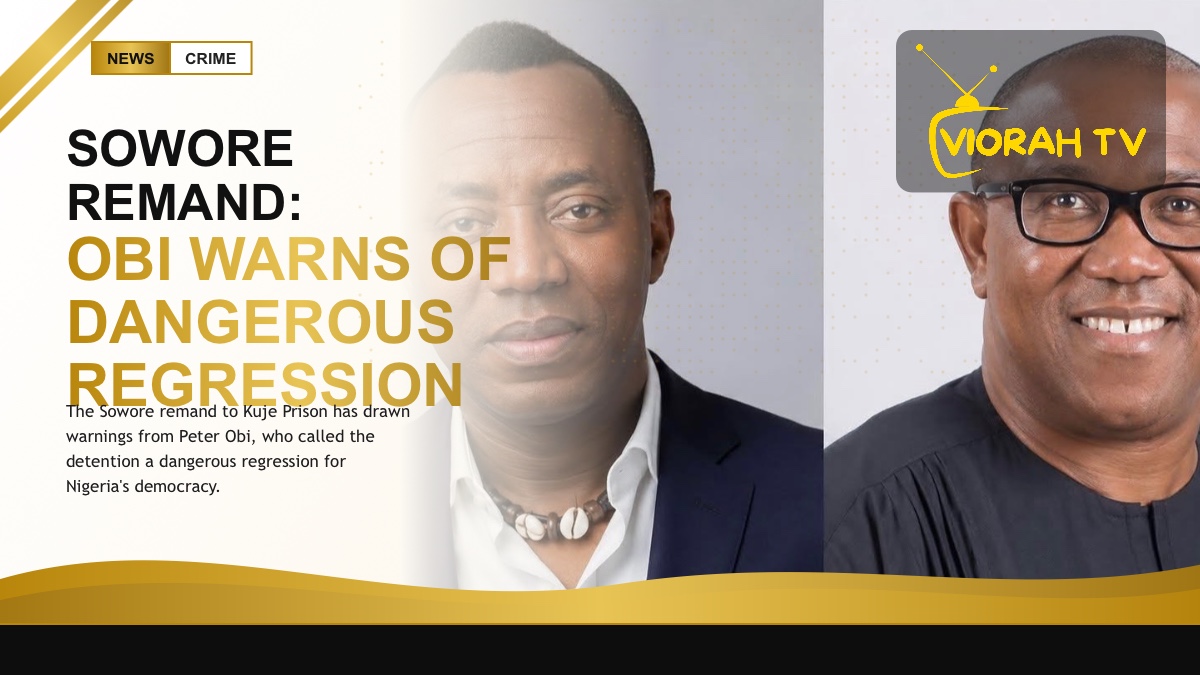
Inside the Sowore remand order
Justice Mohammed Umar ordered the detention pending the hearing of Sowore’s application seeking a stay of execution of an earlier ruling that revoked his bail. The court had withdrawn his bail on June 16 after he failed to appear for a scheduled hearing, an absence he disputes. On Monday the judge also dismissed Sowore’s separate request that the judge step aside over alleged bias.
Sowore, a former presidential candidate and publisher, has faced a string of charges over recent years. His supporters insist the cases are designed to silence a persistent critic of successive governments.
Peter Obi’s warning
Reacting to the news, Peter Obi, presidential candidate of the Nigeria Democratic Congress, said he received word of the detention ‘with deep concern.’ He argued that a thriving democracy ‘does not survive on the silencing of opposing voices’ but rests on protecting freedom of expression and peaceful assembly.
Obi cautioned that treating critics, activists and journalists as threats ‘rather than as partners in building accountability’ signals ‘a dangerous slide toward authoritarianism.’ He urged the authorities to respect constitutional freedoms while the courts decide the matter.
Wider reactions
Civil society groups joined the debate. SERAP urged the federal government to release Sowore and drop the defamation and cybercrime charges against him, while opposition figures in several states described the detention as an attack on free speech. Others insisted the courts must be allowed to rule without political pressure.
The case has reignited a familiar national argument about the line between law enforcement and the suppression of dissent, a tension that has flared repeatedly under different administrations.
Why it matters
The Sowore remand has become a test of how Nigeria balances judicial authority with civil liberties. Activists fear that detaining a prominent critic ahead of the 2027 election cycle could discourage others from speaking out.
Government allies counter that no citizen is above the law and that the judiciary, not the street, must settle the dispute. With the stay-of-execution application still pending, the next court date will be closely watched by rights groups at home and abroad.
A flashpoint for 2027 politics
The timing of the case has sharpened its political edge. With campaigning for the 2027 general elections already taking shape, opposition figures argue that the treatment of a high-profile activist sends a chilling message to critics and journalists. Government supporters insist the matter is strictly judicial and should not be politicised, urging Nigerians to allow the courts to do their work.
Sowore’s long history of activism, protest organising and investigative journalism means his cases attract attention far beyond the courtroom. Each hearing draws crowds of supporters, heavy security and intense online debate. Observers say how the authorities handle the remand will shape perceptions, at home and abroad, of Nigeria’s commitment to civil liberties in the run-up to the polls.
Viorah TV is reporting this developing legal and political story neutrally and will publish updates as the court proceedings continue.

