Table of Contents
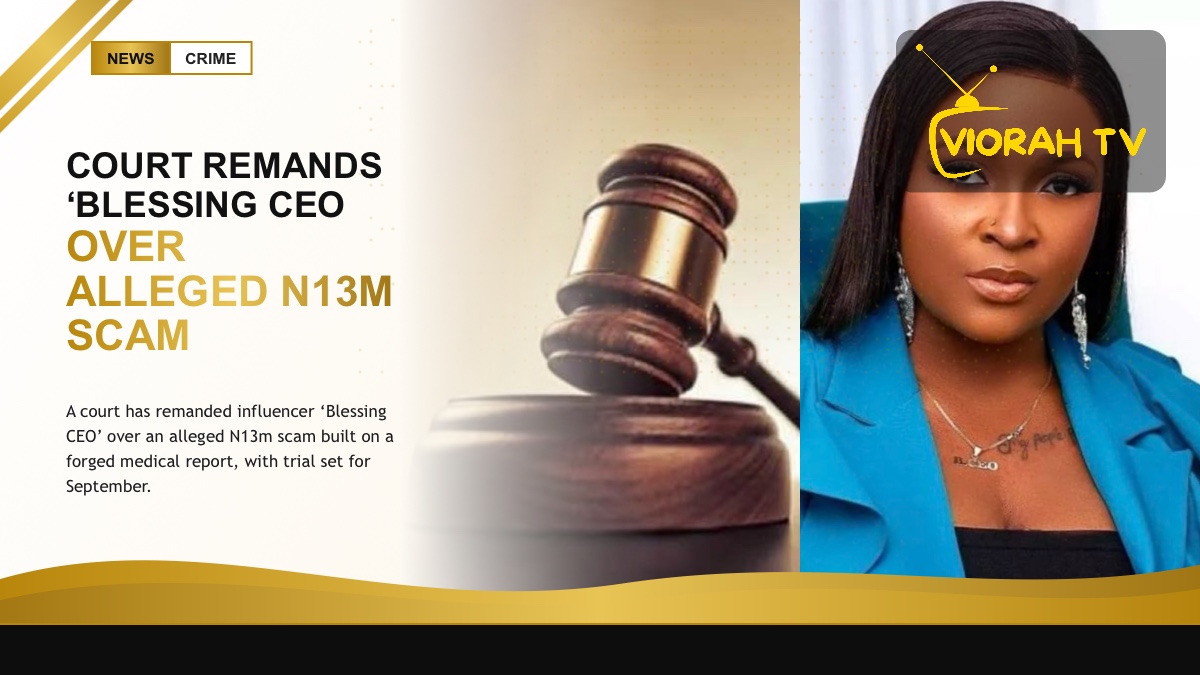
A court has remanded social media influencer ‘Blessing CEO’ over an alleged N13 million scam said to have been built on a forged medical report.
The Gist
- Court remands influencer ‘Blessing CEO’
- Accused of N13m scam via forged medical report
- Trial set for September
The EFCC arraigned Blessing Nkiruka Okoro, popularly known as Blessing CEO, before the Federal High Court in Ikoyi, Lagos. She pleaded not guilty.
The charges against Blessing CEO
Prosecutors brought a six-count charge covering forgery, possession of false documents and obtaining money under false pretences. The charge also cited fraudulent conversion and retention of proceeds of unlawful activity.
According to the commission, the influencer allegedly forged a medical report claiming a terminal diagnosis. The document was purportedly issued by a diagnostics firm.
The EFCC says she used the report to solicit about N13 million from members of the public. The agency frames the case as a misuse of public sympathy.
What the court decided
Justice Yellim Bogoro ordered that she be remanded in the custody of the Nigerian Correctional Service. The judge adjourned the matter to 24 September 2026 for trial.
At this stage, the allegations remain untested in court. The influencer has denied wrongdoing, and the prosecution must prove its case.
A cautionary moment online
The case has stirred debate about online fundraising and trust. Many Nigerians donate to appeals they see on social media, often without any way to verify the claims.
Charity groups say genuine medical appeals can suffer when high-profile fraud allegations surface. Donors, they warn, may become wary of helping people in real need.
Why it matters
Health-related appeals are sensitive because they rely on compassion and urgency. Allegations of a faked diagnosis, if proven, would strike at that goodwill.
Legal experts note that forgery and obtaining by false pretences carry serious penalties under Nigerian law. The outcome will depend on the evidence presented at trial.
The rise of online appeals
Crowdfunding for medical bills has exploded across Nigerian social media in recent years. Genuine cases have raised millions, sometimes saving lives families could not otherwise afford to.
But the same tools can be abused, and verification is often weak. Donors rarely see hospital records, and emotional stories can travel faster than any fact-check.
Charity advocates say a few high-profile fraud claims can poison the well for everyone. People in real need, they warn, may then struggle to be believed.
They advise donors to give through trusted hospitals or registered organisations where possible. Asking for verifiable documents, they add, is reasonable rather than unkind.
Whatever the verdict, the matter has sharpened public caution about viral appeals. Many users now say they will look twice before sending money to a stranger online.
Lessons for donors
Consumer advocates say the case is a teachable moment for a generous public. Compassion, they note, works best when paired with a little caution.
They suggest simple checks before giving: confirm the hospital, ask for documents, and use traceable payment methods. Such steps, they say, protect both donor and recipient.
Genuine patients, meanwhile, are encouraged not to lose heart. Verified appeals through trusted channels still draw strong support from Nigerians.
For now, the influencer awaits her day in court. The case of Blessing CEO will be watched closely as a test of how online appeals are policed.
Source: EFCC