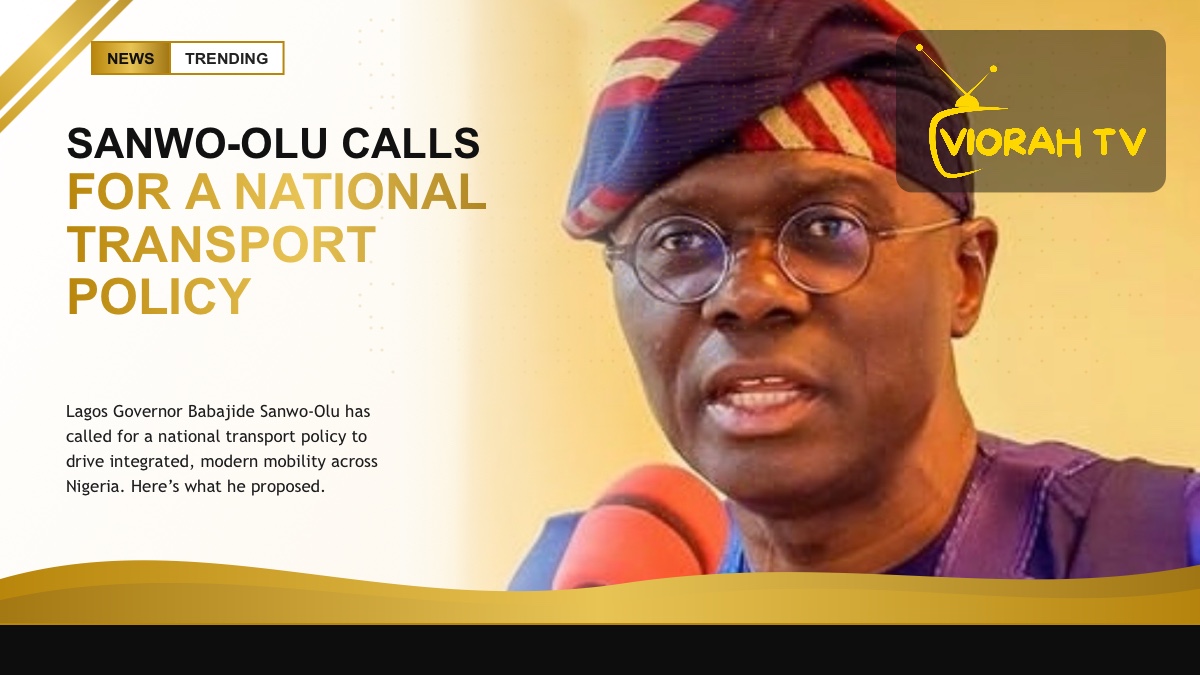
Lagos State Governor Babajide Sanwo-Olu has called for the development of a national transport policy, arguing that Nigeria needs a coordinated framework to modernise mobility and ease movement across the country.
The case for a national framework
Sanwo-Olu made the appeal as he highlighted the gaps that come with fragmented, state-by-state approaches to transport. A national policy, he suggested, would help align road, rail and water systems into a more integrated network.
For a country grappling with congestion and rising mobility demands, a unified strategy could improve planning, investment and the coordination of major projects across state lines.
Lessons from Lagos
As governor of Nigeria’s commercial hub, Sanwo-Olu has overseen ambitious transport projects, including rail lines and reforms aimed at decongesting one of Africa’s busiest cities. That experience informs his push for a wider policy.
Lagos’s scale and traffic challenges have made it a testing ground for multi-modal transport solutions, lessons the governor argues could benefit the nation as a whole.
Why it resonates
Transport sits at the heart of economic productivity, and inefficiencies cost time and money for commuters and businesses alike. A national policy could provide the long-term direction the sector often lacks.
The call also speaks to a broader conversation about infrastructure planning in Nigeria, where coordination between federal and state authorities is frequently cited as a hurdle.
The bigger picture
Whether the proposal gains traction will depend on buy-in from federal authorities and other states. But the intervention adds a prominent voice to demands for smarter mobility planning.
For commuters across Nigeria, the promise of a more connected, efficient transport system is one with real, everyday stakes.

