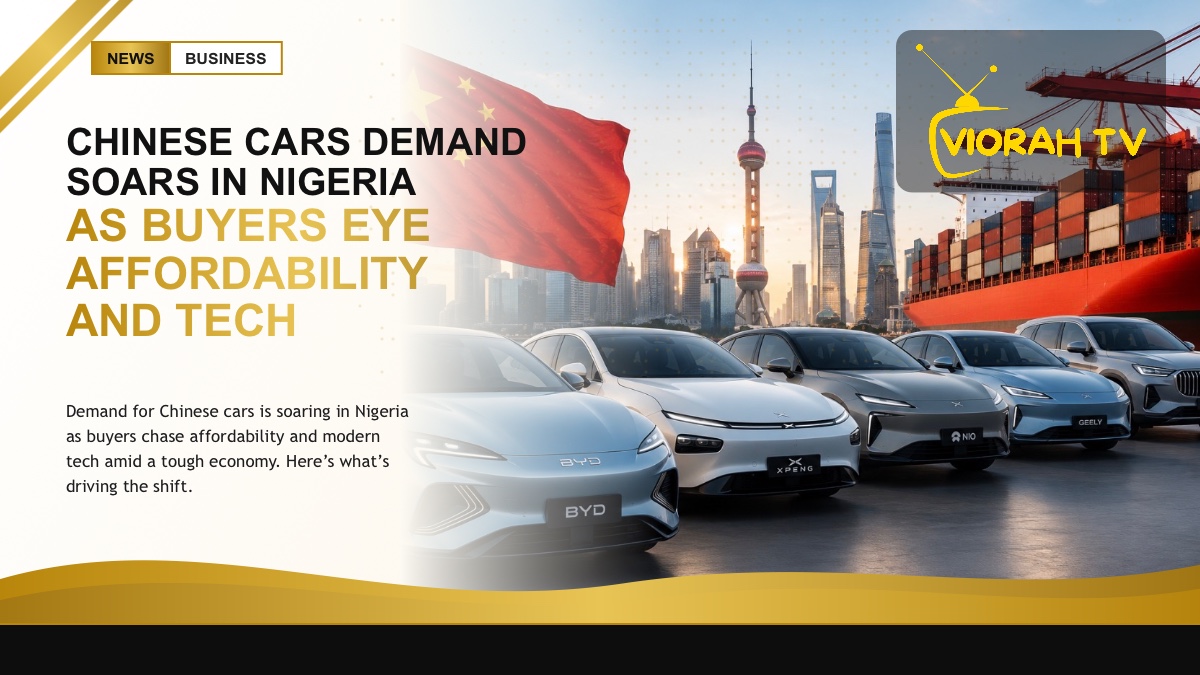
Demand for Chinese cars is rising sharply in Nigeria as buyers, squeezed by a tough economy, increasingly chase affordability and modern features. The trend is reshaping a market long dominated by older brands and used imports.
Why buyers are switching
With the cost of vehicles climbing, many Nigerians are drawn to Chinese brands that promise newer technology at more accessible price points. For budget-conscious buyers, the value proposition is hard to ignore.
Features once reserved for premium models, from touchscreens to driver-assistance tech, are increasingly available in lower-priced Chinese cars, widening their appeal.
A changing auto landscape
For years, Nigeria’s car market leaned heavily on used imports, popularly known as “tokunbo,” and established Japanese and European brands. Chinese manufacturers are now carving out a growing share.
Expanding dealership networks and financing options are helping bring these vehicles within reach of more buyers, accelerating their adoption across the country.
Affordability meets the economy
The shift mirrors broader economic realities. As household budgets tighten, value and fuel efficiency weigh heavily on purchasing decisions, and many Chinese models are positioned around exactly those priorities.
The rise of electric and hybrid options from Chinese makers also taps into rising interest in lower running costs, an attractive prospect amid fuel-price pressures.
What it means for the market
Greater competition could push prices and innovation in the buyer’s favour, while challenging incumbent brands to respond. For consumers, more choice is generally good news.
If the momentum holds, Chinese cars could become a defining feature of Nigeria’s evolving auto market in the years ahead.

