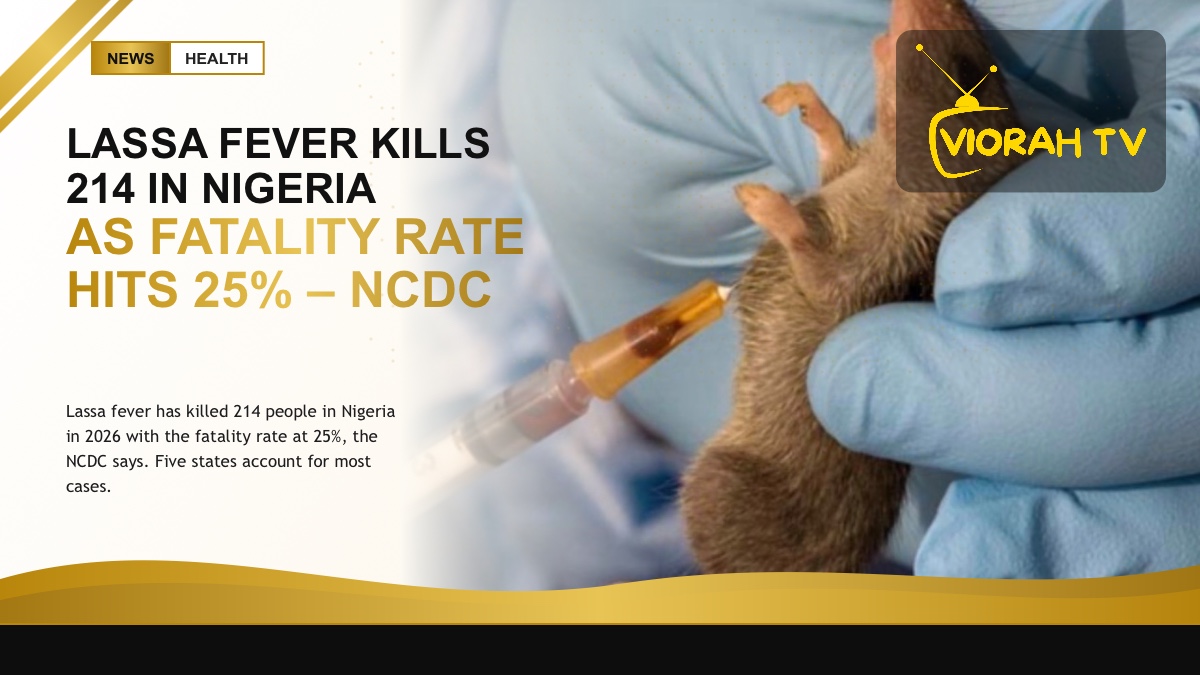
Lassa fever has claimed 214 lives in Nigeria so far in 2026, with the case fatality rate climbing to 25 per cent, the Nigeria Centre for Disease Control and Prevention (NCDC) has said. The figures point to a deadlier outbreak than the same period last year.
A sharp rise in deaths
The data is contained in the NCDC’s Lassa Fever Situation Report for Week 23, covering June 1 to June 7. The agency said the 25 per cent fatality rate marks a steep increase from the 18.9 per cent recorded over the same period in 2025, with both suspected and confirmed cases also higher year-on-year.
New confirmed cases in the latest week were reported in Edo, Ondo, Bauchi and Ebonyi states, with no new healthcare-worker infections recorded during the period.
Where the cases are concentrated
Since January 2026, the outbreak has spread across 23 states and 109 local government areas. Five states account for about 84 per cent of all confirmed cases: Ondo leads with 28 per cent, followed by Bauchi (25 per cent), Taraba (15 per cent), Edo (10 per cent) and Benue (6 per cent). The remaining cases are spread across 18 other states.
Why the toll keeps climbing
Health officials have attributed the high fatality rate to late presentation of cases, poor health-seeking behaviour, the high cost of treatment and weak environmental sanitation in high-burden communities. Early symptoms can resemble malaria, which often delays diagnosis and the start of treatment.
Partners in the response
The NCDC says its multi-partner, multi-sectoral Incident Management System remains activated to coordinate the response at federal, state and local levels. Working with partners such as the World Health Organization, UNICEF and Médecins Sans Frontières, the agency has intensified surveillance, contact tracing, case management and public awareness campaigns, alongside efforts to protect frontline health workers.
Staying safe
Lassa fever is primarily transmitted through contact with food or household items contaminated by the urine or faeces of infected rodents, and through the bodily fluids of infected people. Authorities continue to urge Nigerians to keep their environments clean, store food properly to deter rats, practise good hygiene and seek care early when symptoms appear.
The NCDC has urged state governments to sustain year-round community engagement rather than react only during the peak dry-season months, when rodent-human contact tends to rise.
Officials say early diagnosis and prompt treatment remain the most effective ways to bring the fatality rate down, which is why awareness and quick care-seeking are being stressed.
This article is for general information. Anyone with health concerns or symptoms should contact the NCDC or a qualified medical professional.

