Nigeria inflation may ease to about 15.8% in June 2026, analysts have projected, even as households continue to feel sharp cost pressures. The forecast points to a modest slowdown rather than relief at the till, and it would still leave prices rising faster than the central bank would like to see.
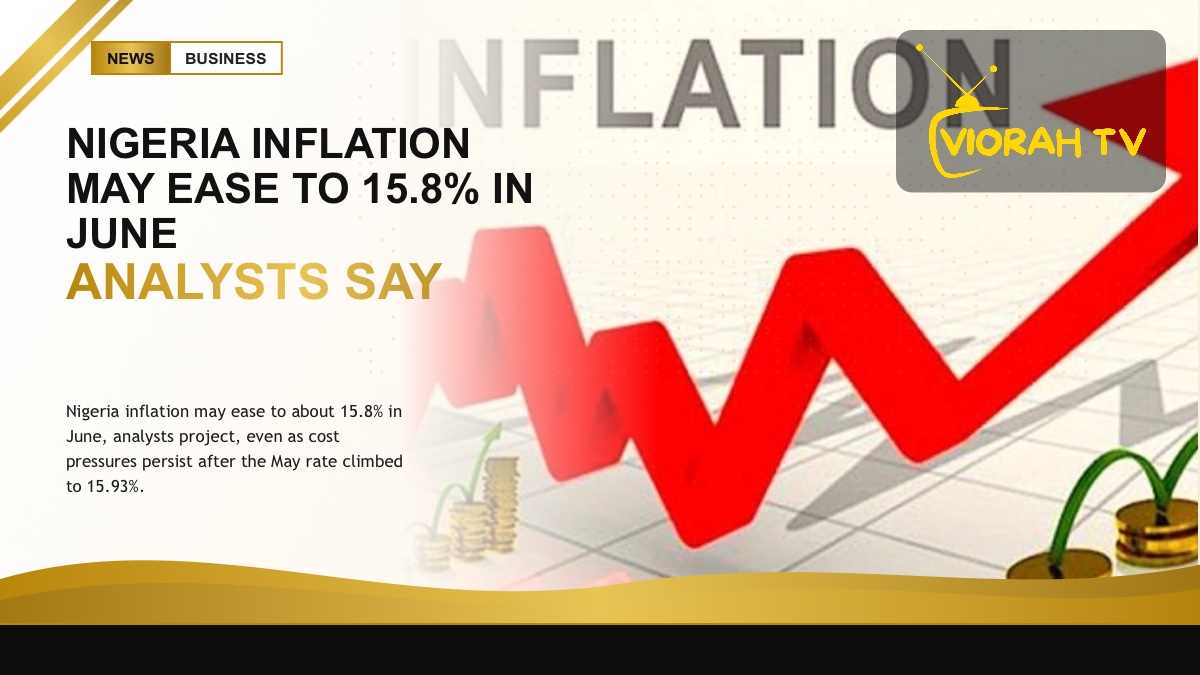
What the Nigeria inflation forecast shows
Analysts tracking the data say base effects and a steadier naira could nudge the headline rate down slightly when the National Bureau of Statistics publishes the June figure. The projected 15.8% is an estimate, not an official reading, and the actual number could shift either way. Even so, it signals that the recent climb in prices may be losing some of its momentum after months of pressure.
How May compared
The latest confirmed data showed Nigeria’s headline inflation rising to 15.93% in May, up from 15.69% in April, marking one of the higher readings in recent months. A dip to around 15.8% in June would break that upward run, but it would be a small move rather than a turning point. For shoppers, the difference between the two figures is unlikely to be felt directly at the market.
Why prices remain high
Food costs, transport, energy and a weaker currency have all kept pressure on prices through the year. Reforms to the foreign exchange market have reshaped how the naira trades, and the central bank has leaned on tighter policy to rein in demand. Analysts say those measures take time to filter through the economy, which is part of why any easing is expected to be gradual rather than sudden.
What it means for Nigerians
For ordinary households and small businesses, a slightly lower inflation rate does not automatically mean cheaper goods. It means prices are climbing a little less quickly than before. Real relief would require several months of falling inflation alongside steadier supply of food and fuel. Policymakers will be watching the June print closely for evidence that the trend is finally bending downward and staying there.
What the central bank may weigh
The figures also feed into wider policy decisions. Nigeria’s monetary authorities track inflation closely when they meet to set interest rates, balancing the need to cool prices against the risk of choking growth. A reading that eases only slightly gives policymakers little room to relax, and analysts say the direction of travel over several months matters more than any single month. Businesses, meanwhile, use the data to plan pricing, wages and investment, so even a small shift in expectations can ripple through the economy. For households watching food and transport costs, the practical question is whether the slowdown, if confirmed, eventually translates into steadier prices at the market rather than just a gentler rate of increase.
The official June figure from the statistics office will confirm whether the forecast holds. Until then, the 15.8% projection is a guide to direction, not a settled fact. Viorah TV will report the confirmed Nigeria inflation number as soon as it is released.

