Table of Contents
Repeated flooding is deepening child malnutrition across parts of Adamawa, as rising waters destroy farms, displace families and strip communities of the food they rely on. Aid groups warn that the cycle of floods and hunger is leaving more children dangerously underfed.
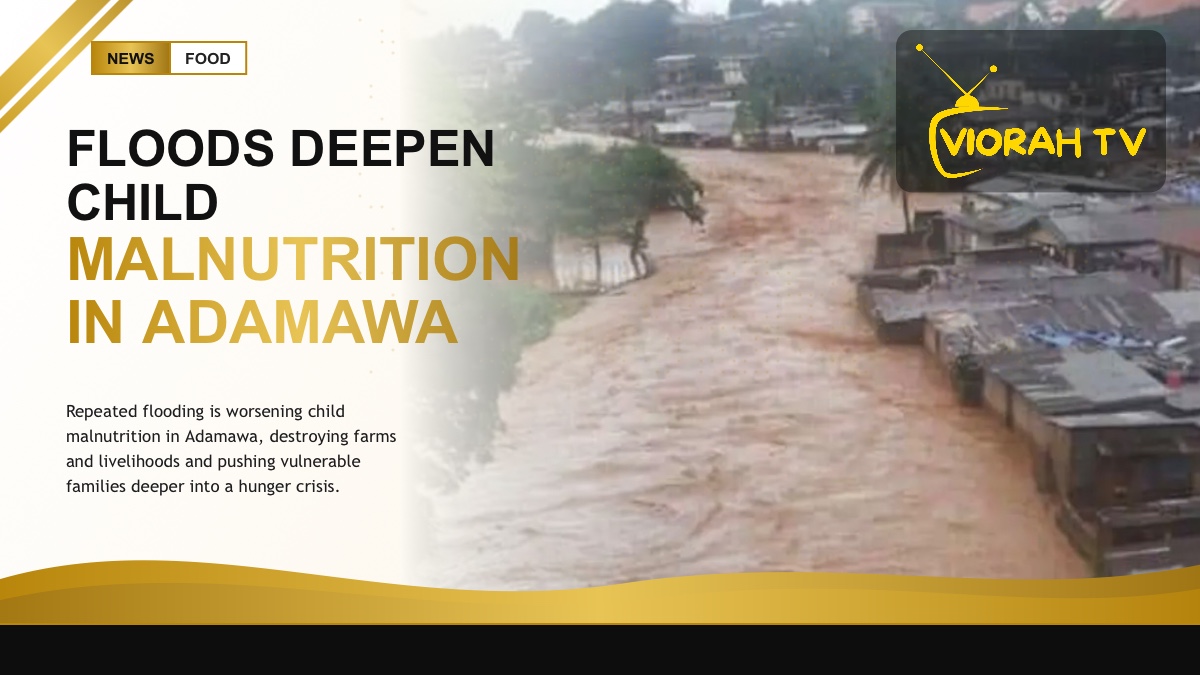
The state sits among the regions hardest hit by recurring disasters, where conflict, poverty and climate shocks collide. Each flood season wipes out crops and livelihoods, pushing already vulnerable households closer to the edge and worsening an entrenched nutrition emergency.
How flooding drives child malnutrition
Floods do their damage in several ways. They submerge farmland and ruin harvests, cutting off the food supply that families depend on. They also contaminate water and spread disease, and repeated childhood illness makes it far harder for young bodies to absorb the nutrients they need.
Stagnant water and poor sanitation, especially in displacement camps, fuel outbreaks of cholera, typhoid and malaria. Sick children eat less and lose more, and the combination of poor feeding, weak maternal nutrition and constant illness drives malnutrition rates steadily upward.
A wider crisis in the North East
Adamawa’s struggles are part of a broader emergency across Nigeria’s North East. Millions of people in Borno, Adamawa and Yobe need urgent humanitarian assistance, the product of years of insecurity layered on top of recurrent floods and disease outbreaks that strain thin resources.
Humanitarian agencies have repeatedly appealed for funding to respond to alarming hunger and malnutrition in the region. The needs are vast, and aid workers say gaps in support leave the most vulnerable, particularly young children and nursing mothers, exposed when disaster strikes.
Climate shocks deepen the danger
Experts link the worsening floods to a changing climate that brings heavier, less predictable rains. For farming communities with little protection, each season carries the threat of ruin, eroding the gains families make in the dry months and trapping them in cycles of loss.
The damage extends beyond food. Destroyed roads and submerged clinics make it harder to reach children with treatment, while displacement scatters families into crowded camps where disease spreads fast and nutrition support is stretched thin.
Children pay the highest price
The human cost falls heaviest on the young. Reports describe children in flood-hit communities forced into scavenging and waste-picking to survive, missing school and risking their health as families lose the means to provide. Such hardship deepens the very malnutrition that threatens their futures.
Poor feeding practices and inadequate maternal nutrition compound the damage, locking some children into cycles of stunting and illness. Without sustained intervention, today’s emergency risks shaping a generation marked by preventable harm.
Steps toward a response
There are efforts to push back. The Adamawa State Government, working with UNICEF and international partners, has launched initiatives to improve maternal and child health and reduce malnutrition. The programmes aim to lift survival rates and strengthen care for mothers and infants in at-risk communities.
Aid workers stress that lasting progress will require more than emergency relief. Better flood defences, stronger health systems and steady nutrition support are all needed to break the link between disaster and hunger, and to protect children before the next season’s waters rise.

