Table of Contents
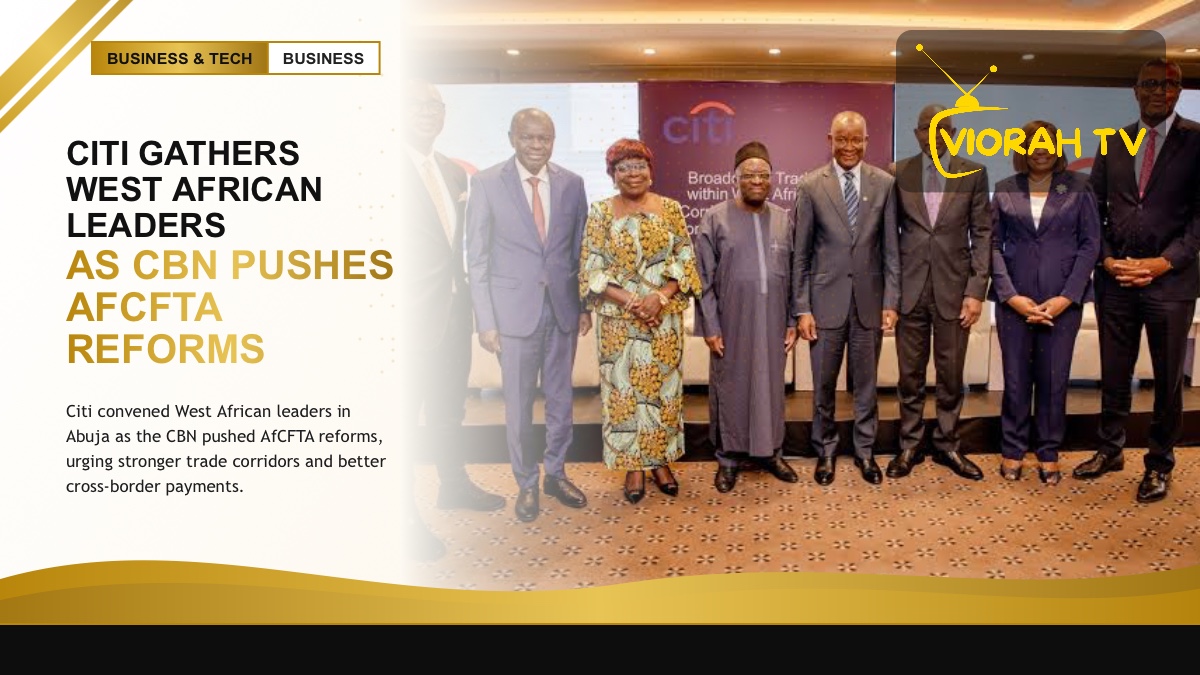
Citi convened West African leaders in Abuja as the Central Bank of Nigeria pushed AfCFTA reforms to deepen regional trade. The symposium examined how to clear bottlenecks and widen commerce across major corridors.
The Gist
- Citi convenes West African leaders in Abuja
- CBN pushes AfCFTA reforms for regional trade
- Focus on trade corridors and cross-border payments
The gathering brought policymakers, regulators and business leaders to the same table.
Why AfCFTA reforms topped the agenda
The event, hosted on June 25, 2026, focused on trade flows along West Africa’s main economic corridors. Its theme centred on broadening those flows under the continental free trade pact.
Delegates came from Nigeria, Ghana and Cote d’Ivoire. The cross-border mix reflected the regional ambition behind the AfCFTA project.
Participants flagged familiar obstacles. Customs delays, non-tariff barriers, fragmented standards, weak infrastructure and limited trade finance topped the list of problems needing urgent attention.
What the CBN said
The Central Bank stressed the role of the financial system in making trade work. Deputy Governor Lamido Yuguda said efficient financial intermediation would be pivotal to lowering costs.
He called for stronger cross-border payment systems, a better-functioning foreign exchange market and deeper access to trade finance. Those steps, he argued, would smooth the movement of goods across borders.
Yuguda added that central banks should act as enablers rather than passive observers. The comment signalled a more active stance on regional integration.
Government and private sector voices
Nigeria’s Minister of State for Industry, Trade and Investment, John Owan Enoh, said industrial policy was the missing link. He pushed for greater private-sector input into how rules are shaped.
Citibank’s leadership in Nigeria said the country plays a pivotal role in the success of the free trade area. Bank executives framed Nigeria as central to any regional breakthrough.
Diplomats from Ghana and Cote d’Ivoire joined the discussion. Their presence underscored a shared interest in unlocking trade between neighbours.
Cote d’Ivoire’s envoy and Ghana’s deputy high commissioner both took part. The line-up signalled that the conversation reached beyond Nigeria’s borders.
The barriers still in the way
For all the ambition, traders still face hard realities. Long customs queues and inconsistent rules slow goods at every crossing.
Poor roads and limited finance add to the cost. Small businesses, in particular, struggle to access the credit needed to trade across borders.
Payment systems remain fragmented too. Converting and moving money between West African currencies can be slow and expensive.
Solving these problems needs coordination across governments. No single country can fix a corridor that runs through several borders.
Why it matters for Nigeria
The AfCFTA is meant to create one of the world’s largest single markets. For Nigeria, smoother trade could expand markets for local manufacturers and reduce reliance on imports.
Yet the gap between promise and practice remains wide. Goods still face long delays at borders, and payment systems across the region are not fully connected.
The symposium offered no instant fix. But by aligning the CBN, the trade ministry and major banks behind reform, organisers hoped to build momentum.
The push for AfCFTA reforms now moves from talk to delivery. Businesses across West Africa will judge progress by how quickly trade gets cheaper and faster.
Source: Central Bank of Nigeria