Table of Contents
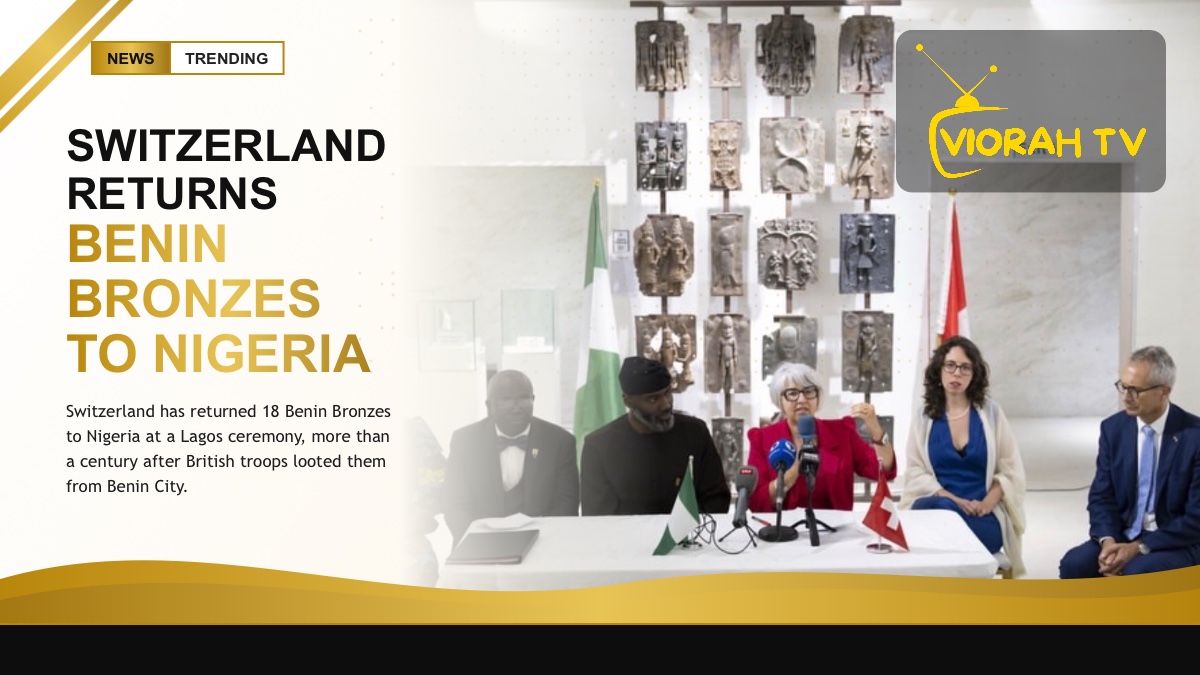
Switzerland has returned a set of famed Benin Bronzes to Nigeria at a handover ceremony in Lagos. The move marks another step in a long restitution campaign.
The Gist
- Switzerland returns 18 Benin Bronzes to Nigeria
- Handover ceremony held in Lagos
- Artefacts looted from Benin City in 1897
The ceremony took place on 29 June 2026 at the National Museum in Lagos. It was reported by international and Nigerian outlets.
Which Benin Bronzes were returned
Eighteen Benin Bronzes were physically handed over. The transfer also included a bronze bracelet and four Ikom monoliths from the Niger Delta.
The items were received on behalf of Nigeria by the National Commission for Museums and Monuments. The commission had filed the restitution claim.
The handover is part of a larger deal. Earlier in 2026, three Swiss museums agreed to transfer ownership of 28 artefacts.
The Swiss museums involved
The artefacts came through the Benin Initiative Switzerland. The grouping was launched in 2021 to address the country’s holdings.
Three institutions took part: the Ethnographic Museum of the University of Zurich, Museum Rietberg and the Geneva Ethnography Museum. Some pieces will remain in Switzerland as long-term loans.
One museum director, Alice Hertzog, summed up the spirit of the return. The artefacts, she said, “were never ours to keep.”
A painful history
The Benin Bronzes were looted when British forces sacked Benin City in 1897. The royal palace was stripped of hundreds of plaques and sculptures.
Those works were scattered to museums and private collections worldwide. Nigeria has spent years seeking their return.
Benin City lies in present-day Edo State. The bronzes are central to the heritage of the old Kingdom of Benin.
A growing wave of returns
Switzerland is not the first country to send bronzes home. Germany and institutions in other nations have made similar moves in recent years.
Each return adds weight to Nigeria’s long campaign. Campaigners hope the trend will pressure remaining holders to act.
Many prized pieces still sit in major Western museums. The most famous collections remain abroad for now.
Years of campaigning
Nigeria has pressed for the return of its artefacts for decades. The effort has involved diplomats, museums and traditional rulers.
Progress was slow for a long time. Many institutions were reluctant to part with prized pieces.
Recent years have brought a shift in attitudes. Several countries now accept the case for return.
The bronzes are masterworks of West African art. They depict kings, court life and history in fine detail.
Their craftsmanship has long been admired worldwide. That fame also fuelled their dispersal after 1897.
Nigeria plans to house returned works in dedicated spaces. Museums and a planned royal museum feature in those plans.
For Edo State, the returns carry deep meaning. Each piece that comes home reconnects a community with its past.
Why it matters
The return feeds a global debate over looted colonial-era art. Each handover adds pressure on other holders to act.
A Swiss official, Elisabeth Baume-Schneider, acknowledged the weight of the moment. The artefacts, she said, “carry a painful history.”
For Nigeria, the bronzes are more than objects. They are symbols of identity, craftsmanship and lost history.
Their homecoming is a cultural win. It also keeps the wider restitution movement firmly in the spotlight.
Source: National Commission for Museums and Monuments