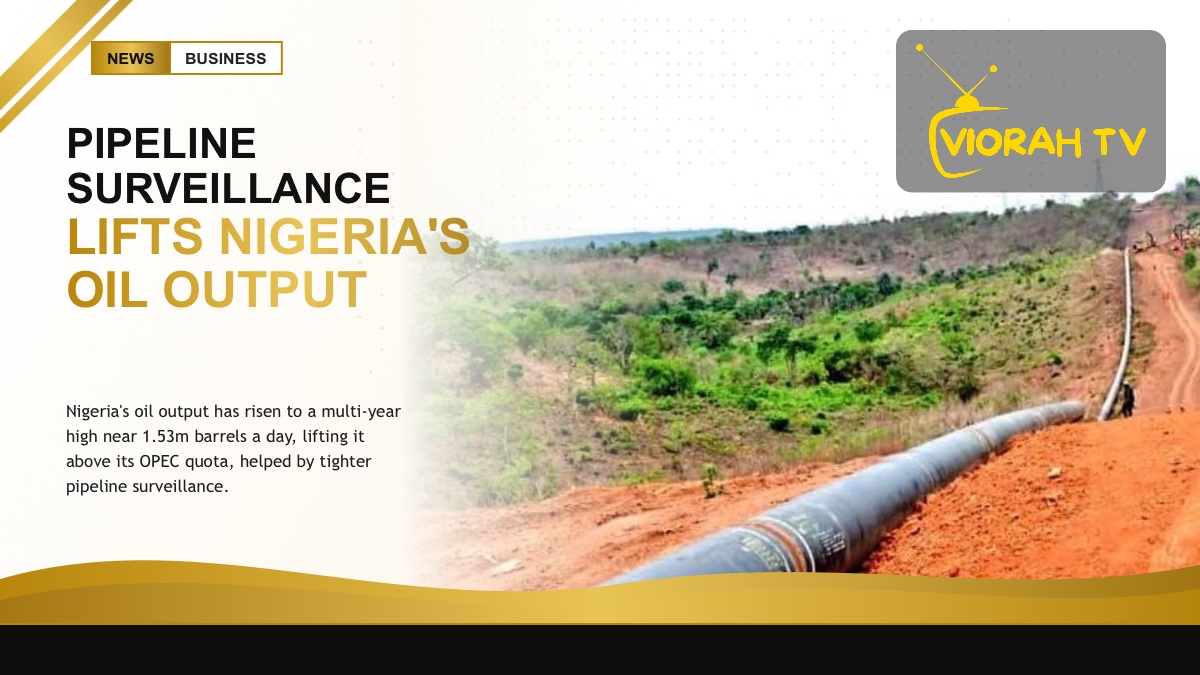
Nigeria’s oil output has climbed to a multi-year high, lifting the country above its OPEC quota, in a rebound officials credit largely to tighter pipeline surveillance. Crude production rose to about 1.53 million barrels per day, the strongest level in more than a year, cementing Nigeria’s position as Africa’s leading oil producer.
How surveillance boosted oil output
The production gain has been attributed in large part to intensified surveillance of oil pipelines, particularly efforts against illegal refining and crude theft in the Niger Delta. Improved security around key infrastructure has reduced losses that long held output down. Officials describe the rebound as the result of better protection of assets, closer monitoring and stronger collaboration between agencies, security operators and oil firms.
Above the OPEC quota
With the increase, Nigeria topped its OPEC production quota in the reference month, exceeding the agreed ceiling by tens of thousands of barrels per day. Including condensate, the country’s total hydrocarbon output reached around 1.7 million barrels per day. Surpassing the quota after a long stretch below target marks a notable turnaround for the sector and the wider economy.
Why it matters for the economy
Oil remains central to Nigeria’s revenue and foreign-exchange earnings, so higher, more stable output has broad economic significance. Stronger production can support government finances and ease pressure on the naira, provided gains are sustained. The link between security and revenue is now starkly clear: protecting pipelines translates directly into barrels that reach the market and money that reaches the treasury.
Sustaining the gains
The challenge ahead is keeping output stable rather than spiking briefly before slipping back. That will depend on sustained security, continued investment and reliable infrastructure. Analysts caution that crude theft and vandalism can return if vigilance drops, so the surveillance effort must be maintained to lock in the recovery the country has achieved.
The crude-theft challenge
Crude oil theft and pipeline vandalism have plagued Nigeria’s oil sector for years, draining the country of revenue and at times forcing producers to shut in output. Illegal tapping of pipelines, makeshift refining and large-scale theft have undermined both the economy and the environment in the Niger Delta. Efforts to curb the problem have included engaging private surveillance operators alongside security agencies, an approach credited with helping recover lost production in the latest figures. Restoring output to above the country’s OPEC quota marks a meaningful turnaround after a long period of underperformance that weighed on government finances and foreign-exchange earnings. Yet analysts caution that such gains can be fragile. Security gains must be sustained, contracts and incentives kept credible, and investment maintained to keep wells and pipelines productive. There are also longer-term questions about the future of oil demand and the need to diversify the economy beyond crude. For now, however, the rebound offers welcome relief, demonstrating how closely Nigeria’s fortunes remain tied to the security of its pipelines and the barrels that flow through them to export terminals and the wider market.
For now, the rise in production offers a rare piece of positive news for Nigeria’s oil sector. Viorah TV will continue to track output, security and their impact on the economy.

