Lagos has joined the Under2 Coalition, the world’s largest network of states and regions committed to net-zero emissions, after Governor Babajide Sanwo-Olu signed a memorandum of understanding with Climate Group. The signing took place in London.
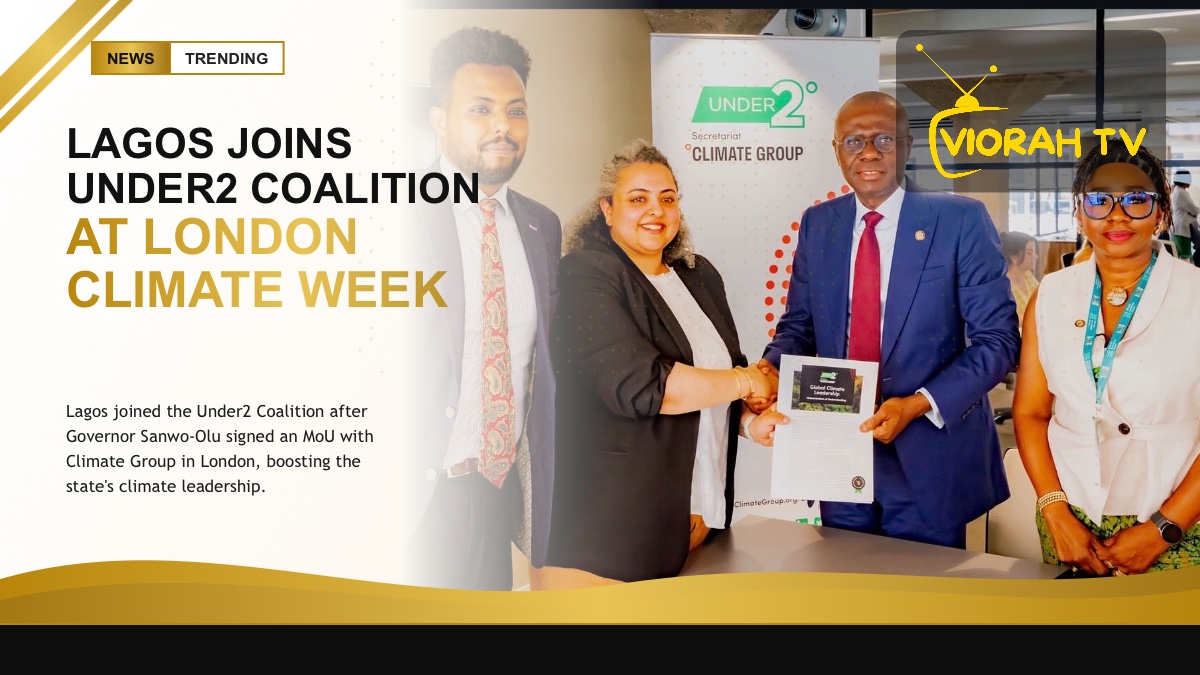
The agreement was sealed during the 2026 London Climate Action Week, marking the state’s formal admission into the global coalition. Lagos becomes part of a network spanning more than 180 states and regions.
What the Under2 Coalition membership means
The Under2 Coalition’s members represent over half of the global economy. Officials said the move reinforces Lagos State’s commitment to climate leadership and sustainable development across Africa’s most populous city.
Membership opens new avenues for international partnerships, investment and technical cooperation. The state said it would now collaborate more closely with subnational governments worldwide on resilience and green growth.
Through the network, Lagos gains access to shared expertise, data and policy frameworks built up by other member regions. That pooled knowledge, officials said, can help the state design and finance its own climate projects.
Lagos positions itself as a climate hub
The government said the partnership strengthens the state’s standing as a leading hub for subnational climate action on the continent. It pointed to opportunities in clean energy, sustainable finance and resilient infrastructure.
Sanwo-Olu led the Lagos delegation to London for the climate week, where the state also pursued partnerships on sustainable finance. The trip placed Lagos alongside major global cities shaping climate policy.
Officials argued that climate leadership is increasingly tied to economic competitiveness, as investors look for cities with credible plans to cut emissions. Lagos, they said, wants to be seen as one of those destinations.
Next steps for the partnership
Under the MoU, Lagos is expected to align local planning with the coalition’s net-zero and resilience goals. The state framed the deal as practical, linking climate ambition to jobs, investment and cleaner growth.
Officials said the coming months would test how quickly the commitments translate into projects on the ground. For a coastal megacity exposed to flooding and rising seas, they argued, stronger climate planning is now essential.
Africa’s growing voice on climate
African states and regions have pushed for a bigger say in global climate decisions, arguing they face severe impacts despite contributing little to emissions. Subnational networks like the coalition give cities a direct seat at that table.
For Lagos, the partnership also carries a financing angle, as access to climate funds increasingly depends on credible plans and trusted partners. The state said it would use the platform to court green investment.
Analysts note that turning pledges into measurable cuts remains the hard part for any government. Lagos will be judged on delivery, from waste and transport to flood defences, in the years ahead.
The state government said it would report progress against its commitments and seek technical help from coalition members where needed. Sustained action, it added, matters more than the symbolism of joining.
Lagos has long grappled with coastal erosion, drainage challenges and rapid population growth. The government said membership of the coalition would help it attract the financing and technical support needed to confront those pressures.

