The Chop Chop James Beard win has made culinary history, becoming the first time the prestigious American foundation has honoured a cookbook devoted entirely to Nigerian food. Ozoz Sokoh’s “Chop Chop: Cooking the Food of Nigeria” took the emerging-voice prize in the books category at the 2026 James Beard Media Awards, a landmark moment for the country’s cuisine on the world stage.
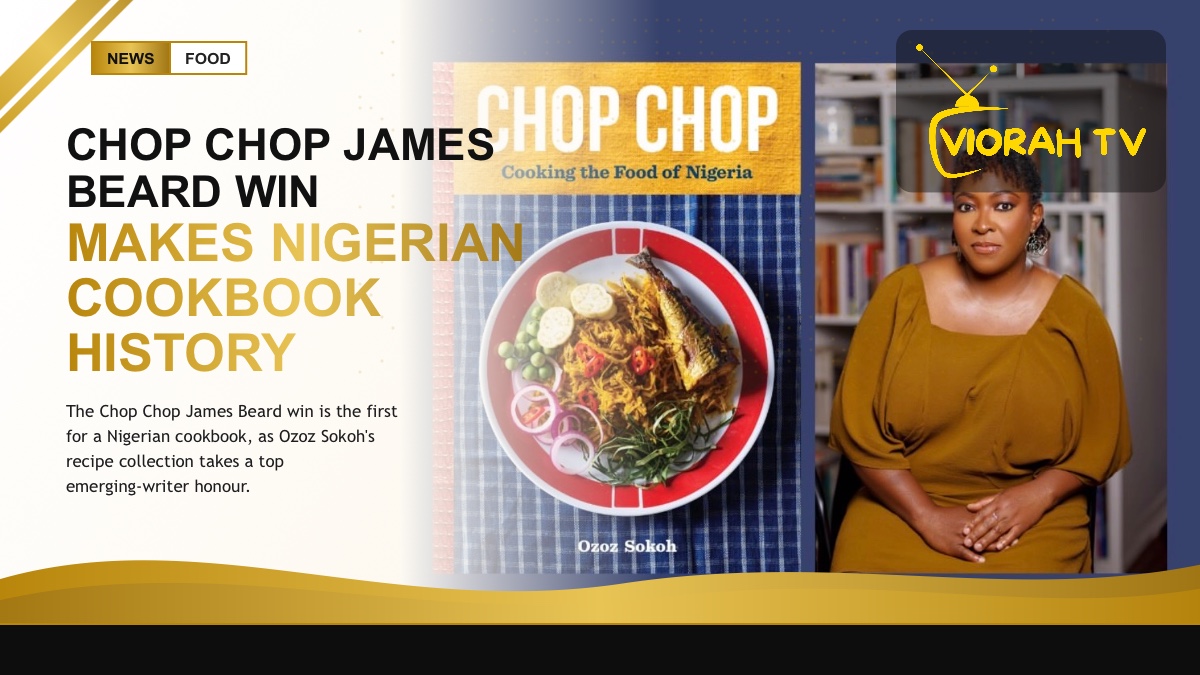
What the Chop Chop James Beard award recognises
The James Beard Awards are among the most respected honours in global food and drink, often described as the industry’s equivalent of the Oscars. The books programme celebrates writing that expands how readers understand cooking and culture. Sokoh’s collection of 100 recipes won judges over with its detailed, affectionate portrait of Nigerian home cooking, from the markets of Lagos to kitchens across the country.
The book gathers dishes that many Nigerians grew up with and explains them clearly for cooks anywhere. Readers find smoky beef suya skewers, egusi soup thickened with greens, restorative pepper soup and jollof rice studded with tomatoes. Soft puff puff and tart hibiscus drinks round out a menu that treats everyday food as something worth documenting with care.
Who is Ozoz Sokoh?
Sokoh is a food explorer, writer and culinary anthropologist who has spent years tracing the history and meaning behind Nigerian ingredients. Through her long-running platform and her Feast Afrique archive, she has worked to preserve recipes and the stories attached to them. Readers know her as a passionate champion of West African food heritage, and the award caps a body of work built patiently over more than a decade.
Her recipe collection had already drawn praise before this latest honour. It earned a Nautilus Book Award gold medal in the food, cooking and healthy living category earlier in the year, signalling strong momentum ahead of the James Beard announcement and confirming the project’s growing reputation among critics.
Why the win matters for Nigerian food
Nigerian cuisine has surged in global popularity alongside Afrobeats and Nollywood, yet it has rarely received this level of formal recognition. For a single cookbook to break through at such a respected awards programme signals that the world’s food establishment is paying closer attention to West African flavours and the cooks who carry them.
The recognition also lands at a moment when Nigerian chefs, restaurateurs and writers are pushing their work onto international menus and bookshelves. A respected award attached to a Nigerian title can open doors for the next wave of food creators, encouraging publishers to invest in stories that were once overlooked.
For home cooks, the practical payoff is simpler. The book frames familiar dishes in clear steps, making it easier for the diaspora and curious newcomers alike to recreate jollof, suya and egusi far from home. That accessibility, judges suggested, is part of what made the collection stand out from a strong field.
A milestone for West African cuisine
The honour adds to a growing list of cultural wins that have lifted Nigeria’s profile abroad. Where music and film led, food now follows, with a documented, award-winning record of the recipes that define the nation’s table. Sokoh has said her aim was always to celebrate Nigerian cooking on its own terms, and the recognition suggests that message has reached a global audience ready to listen.

