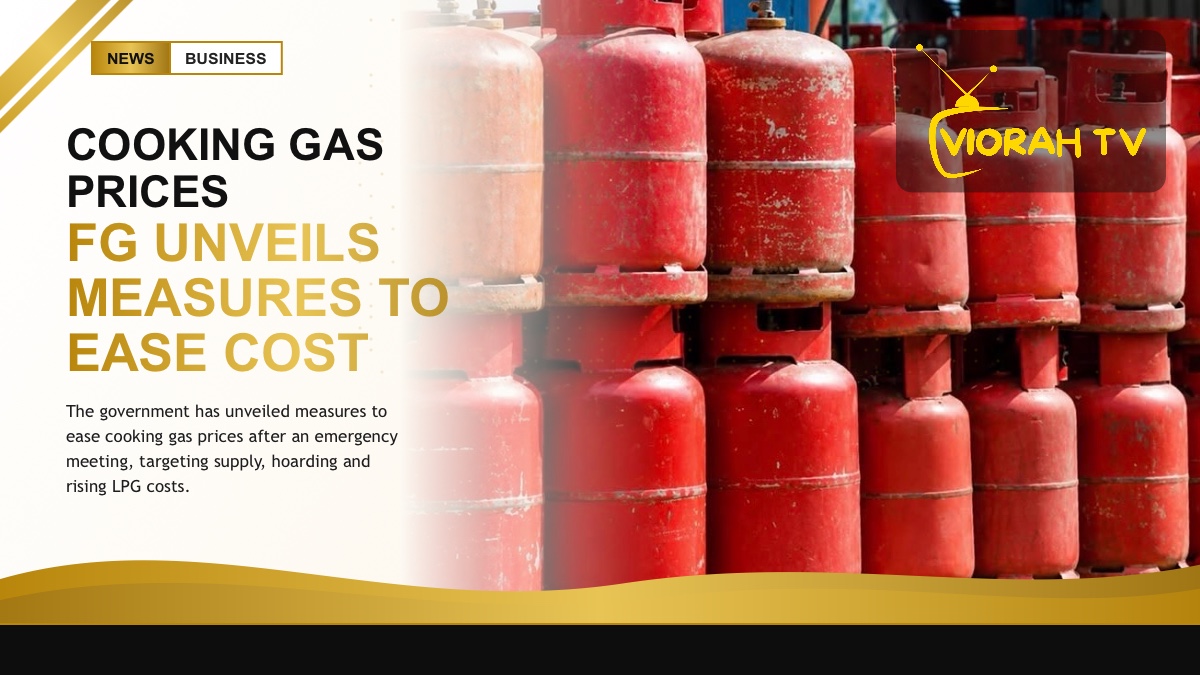
Cooking gas prices have pushed the Federal Government to act, with officials unveiling a package of measures aimed at easing the cost of liquefied petroleum gas (LPG) for Nigerian households. The intervention follows an emergency stakeholders’ meeting convened by the petroleum ministry after the price of cooking gas climbed sharply across the country in recent weeks.
Why cooking gas prices are rising
Officials and regulators pointed to several factors behind the surge. The Nigerian Midstream and Downstream Petroleum Regulatory Authority (NMDPRA) cited global supply disruptions linked to conflict in the Middle East, shortfalls in domestic supply, low import volumes and what it called non-cost-reflective pricing by some wholesalers and retailers. Weak distribution infrastructure and logistics challenges have added to the pressure.
The result has been painful for families. Rates that sat around N1,000 per kilogramme at the start of the year rose to between N1,500 and N1,700 by May, and reached N2,000 to N2,500 in some locations by June. For households that rely on gas for daily cooking, the increases have stretched already tight budgets.
Measures to ease cooking gas prices
The government’s response targets both supply and market behaviour. Regulators were directed to intensify market surveillance, investigate hoarding and diversion, and sanction operators found manipulating the market. Authorities also signalled they would work with security agencies to clamp down on those accused of distorting supply.
On supply, officials directed marketers to increase imports to ease scarcity and stabilise the market. The government said it is also exploring a local blending initiative involving Nigeria LNG, domestic producers and a Port Harcourt plant operator. Officials argue that keeping more locally produced gas in the country, rather than exporting it, would cut logistics costs and improve reliability.
What it means for households
For ordinary Nigerians, the test will be whether the measures translate into relief at the point of sale. The emergency meeting brought together producers, marketers, terminal operators and industry associations, signalling that the government wants the whole value chain involved in any solution. Stakeholders agreed to pursue interventions designed to improve affordability and market stability.
Cooking gas has been promoted for years as a cleaner alternative to firewood and kerosene, part of a wider push to reduce indoor air pollution and protect health. Sharp increases threaten that progress, as some families may switch back to dirtier fuels when gas becomes unaffordable. Keeping LPG within reach is therefore both an economic and a public-health concern.
Small businesses feel the squeeze too. Roadside cooks, restaurants and bakeries that depend on gas to operate have warned that higher fuel costs eat into thin margins and push up the price of meals. When the cost of cooking gas rises, the effect ripples through the wider economy, touching traders and consumers alike. Industry groups at the meeting urged the government to treat the matter with urgency, noting that prolonged scarcity could force some outlets to scale back or shut down entirely.
The road ahead
Government officials framed the package as a first step rather than a final fix, promising continued monitoring of the market. Much will depend on global energy trends, the pace of import deliveries and how firmly regulators enforce the crackdown on hoarding. For now, households across Nigeria will be watching closely to see whether the cost of cooking gas begins to ease in the weeks ahead, and whether the promised interventions reach the kitchens that need them most.

