Table of Contents
A Yelwata memorial has been unveiled in Benue State to honour victims of one of Nigeria’s deadliest recent massacres. Organisers say the monument carries the engraved names of those killed, creating a permanent place of remembrance in the community itself.
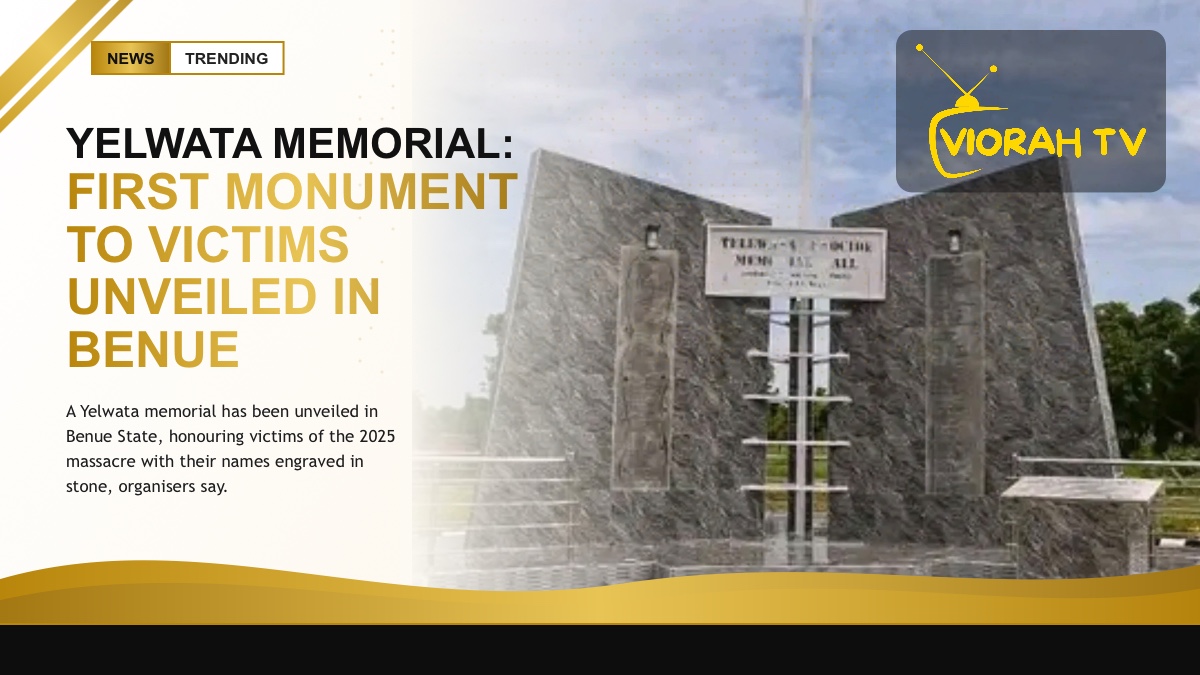
The memorial was unveiled by missionaries from Equipping the Persecuted, a US-based organisation that drove the project. It is described as the first monument of its kind for victims of communal violence in the area.
What the Yelwata memorial commemorates
The monument remembers the Yelwata massacre of mid-June 2025, when gunmen attacked the community and killed scores of residents. Independent reporting at the time put the toll in the range of about 150 to 200, with rights groups and the local Catholic diocese among those documenting the deaths.
Organisers behind the memorial have cited a higher figure of 270 victims. Viorah TV notes that this number comes from the group and has not been independently confirmed; most outside accounts place the death toll in the lower range. The independently reported date of the attack is 13 June 2025.
Names set in stone
The memorial’s organisers say its purpose is to ensure the victims are not forgotten. “Their names are now engraved in stone so they will never be forgotten,” said Judd Saul, founder of Equipping the Persecuted, describing the aim of the project.
For survivors and bereaved families, such monuments can offer a focal point for grief and remembrance. They also serve as a public record of loss in places where violence has repeatedly struck.
A contested and sensitive context
The circumstances of the massacre remain contested. Some accounts attribute it to religious extremism, while others describe it within the long-running herder-farmer and communal conflicts that have plagued Nigeria’s Middle Belt. Nigerian authorities have charged a number of suspects over the killings.
Viorah TV is reporting this story neutrally and attributing contested claims to their sources. The framing of motive, the death toll and the wider causes of the violence are matters on which credible accounts differ, and no single version should be treated as settled fact.
Remembrance and accountability
For bereaved families, the memorial offers a place to grieve and a public acknowledgement that their loss matters. Survivors of mass violence often say that recognition, alongside justice, is central to healing.
Rights advocates stress that monuments should sit alongside concrete steps: thorough investigations, prosecutions and measures to prevent further attacks. Nigeria has charged several suspects over the killings, though the legal process is far from concluded.
The wider debate over how to describe and address violence in the Middle Belt remains unresolved. Whatever the framing, communities continue to call for protection that stops such atrocities before another memorial is ever needed.
Why it matters
The Middle Belt has suffered years of deadly attacks on rural communities, leaving deep scars and unanswered questions about security. Memorials like this one keep the human cost of that violence in public view.
Remembrance, however, sits alongside the harder task of protection and justice. For affected families, a monument is meaningful, but lasting peace will depend on accountability and an end to the cycle of attacks that made the memorial necessary.

