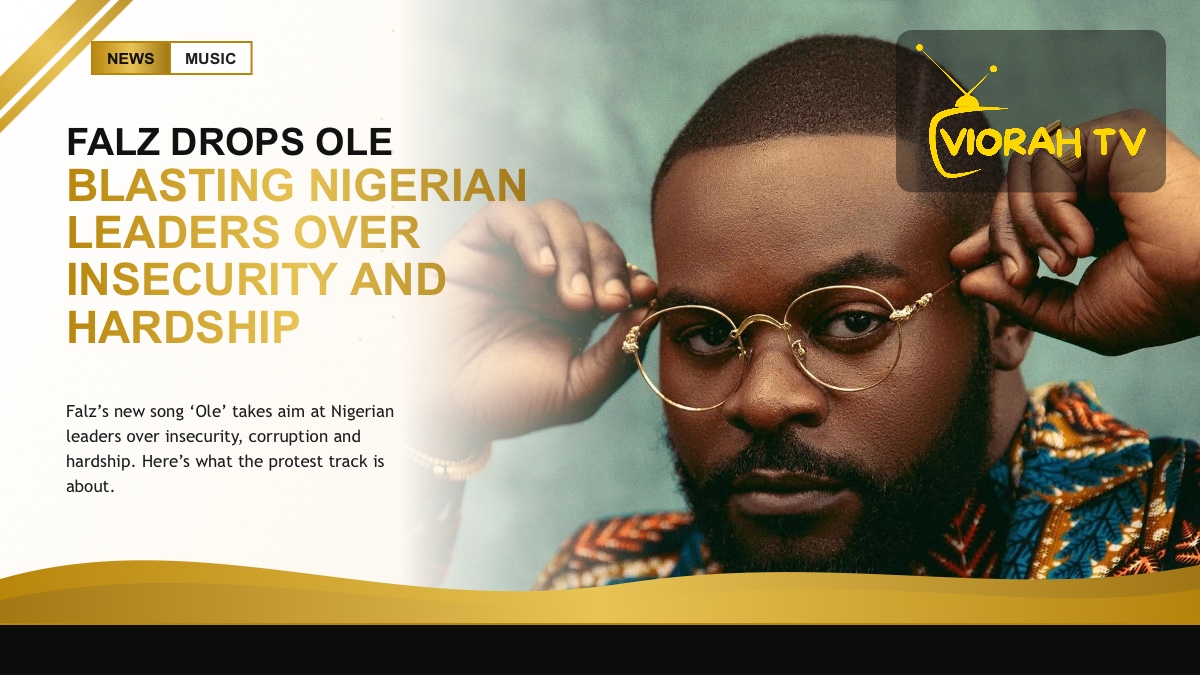
Falz has released a hard-hitting new song titled “Ole,” taking direct aim at Nigerian leaders over insecurity, corruption and economic hardship. The track continues the rapper’s long tradition of using music as social commentary.
A protest song with a sharp message
“Ole,” which means “thief” in Yoruba, channels public frustration over governance and rising hardship. Falz uses pointed lyrics and his trademark wit to challenge leaders he accuses of failing ordinary Nigerians.
The song lands at a moment of heightened anxiety over insecurity, including high-profile abductions, and growing anger over the cost of living. For many listeners, it gives voice to widely shared grievances.
Falz, the activist artist
Falz, son of human rights lawyer Femi Falana, has built a reputation as one of Nigeria’s most socially conscious musicians. Songs like “This Is Nigeria,” “Talk” and “Johnny” have repeatedly tackled corruption, injustice and insecurity.
“Ole” fits squarely within that body of work. Rather than chasing only commercial appeal, Falz again positions himself as a commentator willing to confront power through his art.
Why it strikes a chord
Protest music has a deep history in Nigeria, from Fela Kuti onwards, and Falz draws on that lineage. By naming hardship and insecurity directly, he taps into emotions many Nigerians are feeling right now.
Online, the song sparked strong reactions, with listeners praising its boldness and circulating its sharpest lines. That engagement is part of how protest songs build influence beyond the charts.
Art as accountability
“Ole” is a reminder that Nigerian artists often double as critics of those in power. Whether or not it changes policy, it keeps difficult conversations in the public eye.
For Falz, the goal appears unchanged: to entertain while holding leaders to account, and to make sure ordinary people’s frustrations are heard.

