Table of Contents
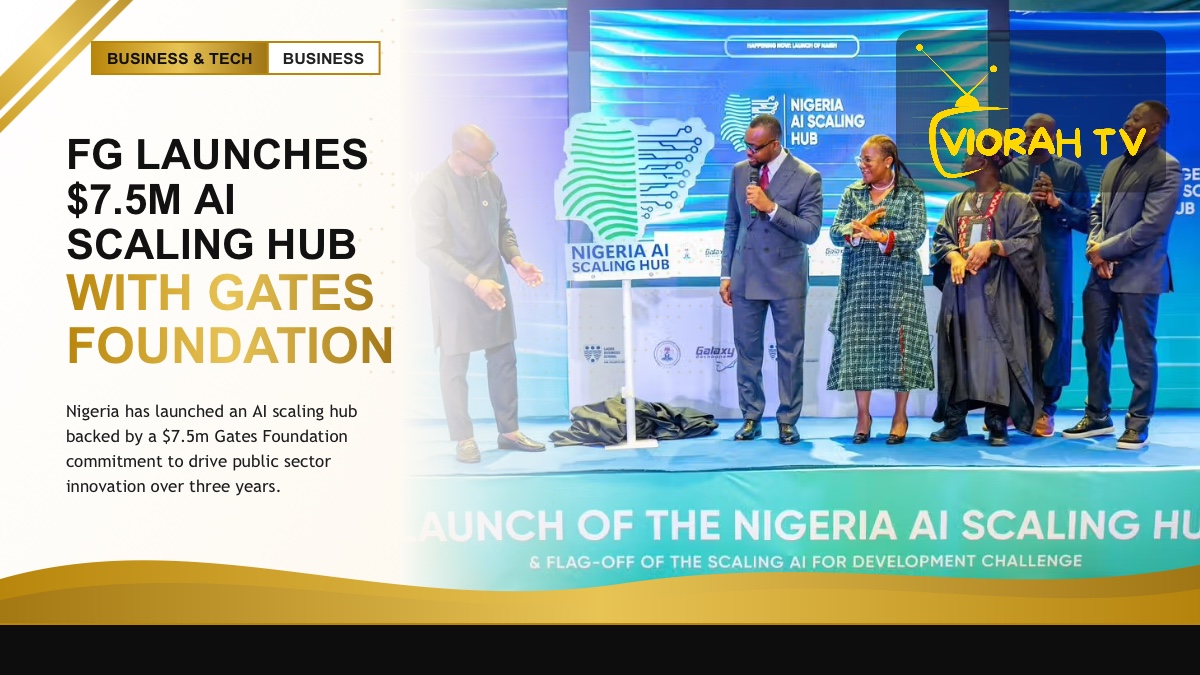
The Federal Government has launched an AI scaling hub backed by a $7.5m commitment from the Gates Foundation to drive public sector innovation.
The Gist
- FG launches national AI scaling hub
- Gates Foundation commits $7.5m over three years
- Targets public-sector innovation
The initiative is designed to move artificial intelligence projects beyond pilot stage. The aim is to deploy proven tools across the country at scale.
Inside the AI scaling hub
The Nigeria Artificial Intelligence Scaling Hub will coordinate mature AI solutions. It brings together government agencies, tech firms, academia and development partners.
The $7.5m, pledged over three years, will fund technical assistance, computing infrastructure, policy support and partnerships. The focus is on practical, large-scale impact.
Alongside the hub, the government unveiled a challenge to source and scale AI ideas. It is meant to reward solutions that can work beyond a single test.
Where the focus will be
Officials say the early priorities are health, agriculture and education. These are sectors where AI tools could reach millions of citizens quickly.
In health, that could mean better diagnostics and service planning. In farming, it could improve yields and supply decisions for smallholders.
Education stands to gain from smarter learning and administration tools. The common thread is using technology to stretch limited public resources.
Cutting reliance on foreign cloud
The hub is also expected to expand access to local AI computing power. That would reduce dependence on foreign cloud providers.
Local infrastructure can lower the cost of building and running AI models. It can also keep more sensitive data within the country’s borders.
Cheaper, closer computing could open the field to smaller Nigerian developers. Cost has long been a barrier for local startups.
Why it matters
Many promising tech projects in Nigeria stall after the pilot stage. A dedicated hub aims to fix that gap by helping good ideas grow.
Backing from a major global foundation adds funding and credibility. It also signals confidence in Nigeria’s digital ambitions.
From pilots to real impact
Nigeria already hosts a lively community of AI developers. The challenge has long been turning clever prototypes into services that reach the public.
A coordinating hub can fix part of that. By pooling funding, data and expertise, it lowers the risk of promising tools fizzling out.
Partners say the three-year window is meant to show results, not just plans. The focus is on tools that can scale across states.
Success will be measured in services delivered. If clinics, farms and classrooms feel the benefit, the model could spread quickly.
The launch fits a wider government push on the digital economy. Officials have repeatedly framed technology as a route to jobs and growth.
Bringing in a global partner adds both money and know-how. It also signals to investors that Nigeria is serious about scaling AI responsibly.
The real proof will come in delivery. Tools that move from pilot to nationwide use are the outcome the hub is being judged against.
If it works, the model could shape how the public sector adopts technology. For now, the launch marks a clear step toward scaled, homegrown AI. Backers say the initiative could become a template for the region, showing how a developing economy can harness artificial intelligence to improve everyday public services at scale.
Source: Federal Government of Nigeria