Table of Contents
Forensic gaps delay thousands of criminal cases in Nigeria every year, Lagos State Governor Babajide Sanwo-Olu has warned, pointing to weak evidence rather than missing witnesses as the reason many prosecutions collapse. He raised the alarm at a forensic summit in Lagos, where experts gathered to confront the country’s evidence-handling problems.
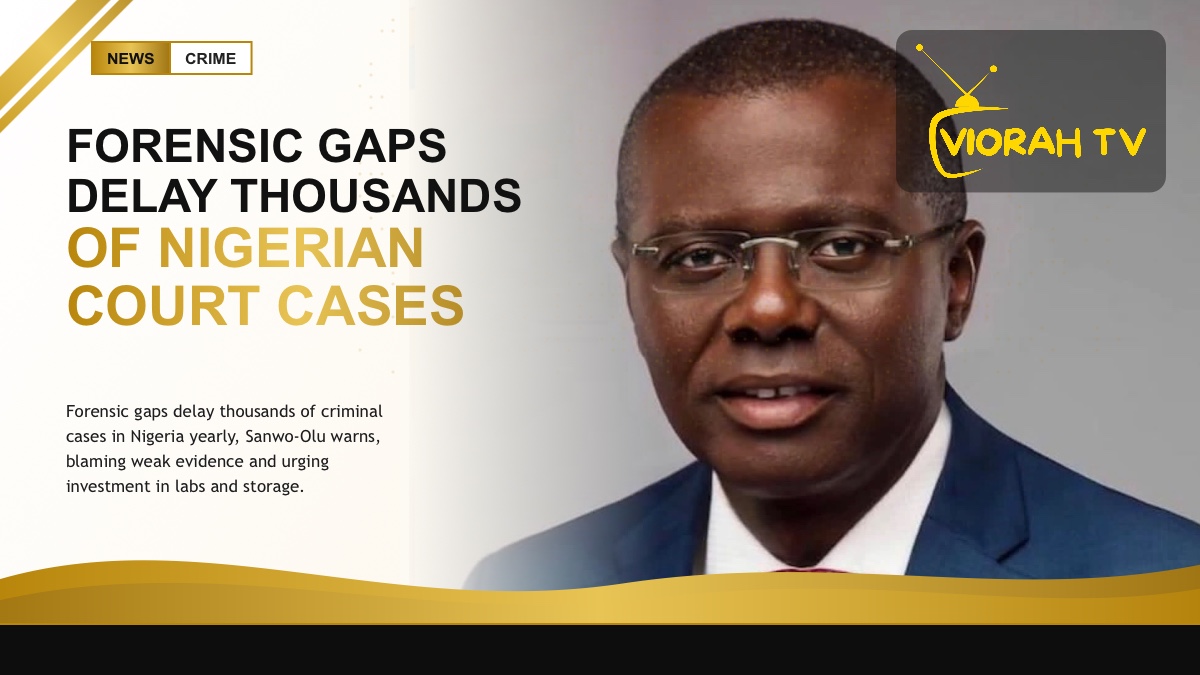
Forensic Gaps Stall Criminal Cases, Sanwo-Olu Says
Speaking through a representative at the 2026 Forensic Summit, organised by the International Academy of Forensics in collaboration with The Guardian Newspapers, the governor said thousands of criminal cases stall each year — not for want of witnesses or suspects, but for want of evidence that can withstand scrutiny in a court of law. He described the core problem as the distance between what investigators gather and what prosecutors can actually prove.
That gap, he argued, lets serious cases drag on or fall apart entirely, eroding public confidence in the justice system. Reliable scientific evidence — from fingerprints and DNA to ballistics and digital records — is often the difference between a conviction and an acquittal, yet Nigerian courts frequently lack it.
Lagos Invests in Evidence Storage
To close the gap, the governor said Lagos has begun investing in forensic infrastructure. He pointed to a demilitarised warehouse built at Majidun in 2025 for the secure storage of exhibits, confiscated items and properties held under judicial custody. Before the facility, managing and preserving exhibits posed serious operational and security challenges.
With the dedicated warehouse, the state can now preserve, document and secure exhibits properly, improving accountability in the handling of judicial evidence. Officials say better storage reduces the risk of evidence being lost, tampered with or degraded before trial — a common reason cases unravel midway.
Why Forensic Reform Matters
Nigeria’s criminal justice system has long struggled with overcrowded courts, slow trials and a heavy reliance on witness testimony. Analysts say strengthening forensic capacity could ease that burden by giving courts objective evidence that does not depend on witnesses who may be intimidated, unavailable or unreliable.
International bodies have raised similar concerns. The United Nations Office on Drugs and Crime has warned that weak forensic evidence undermines the prosecution of sexual and gender-based violence in Nigeria, where survivors often struggle to secure convictions without medical and scientific proof.
Beyond serious crimes, the shortfall affects everyday cases too. Without dependable laboratory results, courts lean on confessions and eyewitness accounts that can be challenged on appeal, leaving verdicts open to dispute. Stronger forensic systems, supporters argue, would also protect the innocent by reducing wrongful convictions built on shaky testimony.
The Road Ahead
Experts at the summit called for sustained investment in laboratories, trained personnel and clear protocols linking police investigators with prosecutors. They argued that hardware alone is not enough; officers must be trained to collect and preserve evidence in ways that hold up in court.
For now, the governor’s comments put a spotlight on a quiet but costly problem in Nigeria’s courts. Closing the forensic gap, officials suggest, could speed up trials, strengthen convictions and restore some public trust in a justice system many citizens see as slow and uncertain.

