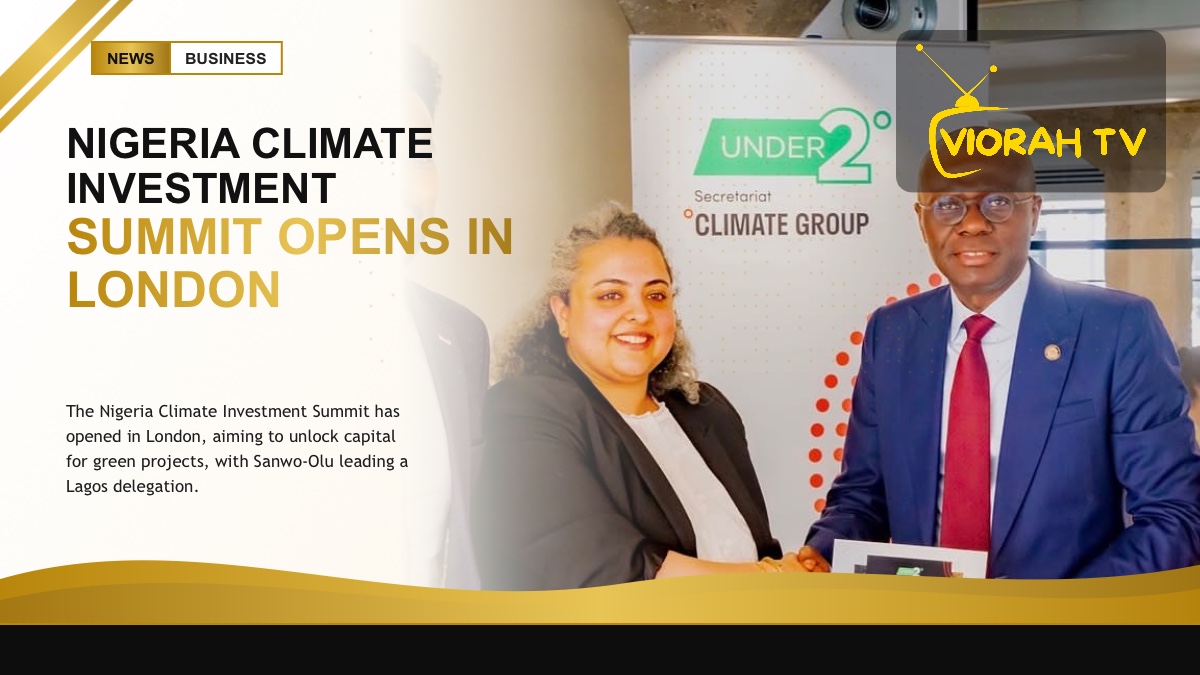
The Nigeria Climate Investment Summit has opened in London as a flagship event of London Climate Action Week, drawing global investors and policymakers. The Climate Investment Summit aims to unlock capital for Nigeria’s growing pipeline of green and transition projects, positioning the country as a destination for climate finance on the international stage.
What the Climate Investment Summit aims to do
The gathering brings together development finance institutions, corporate leaders and policymakers to discuss how to channel investment into Nigeria’s climate projects. With financing a perennial obstacle for clean-energy and adaptation efforts, the summit is designed to connect projects with the capital they need. Organisers hope it will translate interest into concrete commitments that move schemes from paper to delivery on the ground.
Who is speaking
Confirmed participants include senior figures from government and international institutions. Deputy Speaker of the House of Representatives Benjamin Kalu is among the speakers, alongside Damilola Ogunbiyi, a UN special representative and co-chair of UN-Energy, and other global voices on climate and energy. The lineup reflects the summit’s effort to bridge Nigerian policymakers with international finance and expertise.
Lagos in the spotlight
Governor Babajide Sanwo-Olu is leading a high-powered Lagos State delegation to the summit, accompanied by senior officials. The governor is expected to unveil plans for Lagos to host Africa’s first climate action week, joining a roster of global cities that convene such events annually. The move signals an ambition to make Lagos a hub for climate dialogue and investment on the continent.
Why green finance matters
Nigeria faces significant climate pressures, from flooding to energy-transition demands, and meeting them requires substantial investment. Domestic resources alone are unlikely to be enough, making access to international green finance important. By showcasing projects and policy ambition abroad, Nigeria seeks to attract the funding and partnerships needed to build resilience and pursue cleaner growth across the economy.
From talk to delivery
Summits can generate pledges and partnerships, but the lasting value lies in what follows. Analysts caution that announcements must be matched by financing that actually flows and projects that get built. For Nigeria, the test will be whether the connections made in London convert into investment at home, supporting tangible improvements in energy, infrastructure and climate resilience for ordinary citizens.
Lagos’s green ambitions
For Lagos, the summit is a chance to showcase ambitions that extend to the blue economy and sustainable finance, areas the state has flagged as priorities. Sub-national governments are increasingly active in climate diplomacy, recognising that cities and states are on the front line of impacts such as flooding and coastal risk. By engaging international investors directly, Lagos aims to attract funding for projects that central allocations alone cannot cover. Hosting its own climate action week would further raise the city’s profile and signal a long-term commitment to the agenda. The wider lesson is that climate action in Nigeria is no longer the preserve of the federal government, with states and cities seeking partnerships and capital to pursue greener, more resilient growth on their own terms.
The summit underscores Nigeria’s bid to attract climate capital and lead regional conversations. Viorah TV will continue to follow the outcomes and any investment commitments that emerge.

