Only one Nigerian university has made Africa’s top 10 in a recent global ranking, renewing concern about the state of higher education in the country. The University of Ibadan stood as the sole Nigerian institution among the continent’s elite, a result experts link to chronic underfunding that keeps the wider sector below international benchmarks.
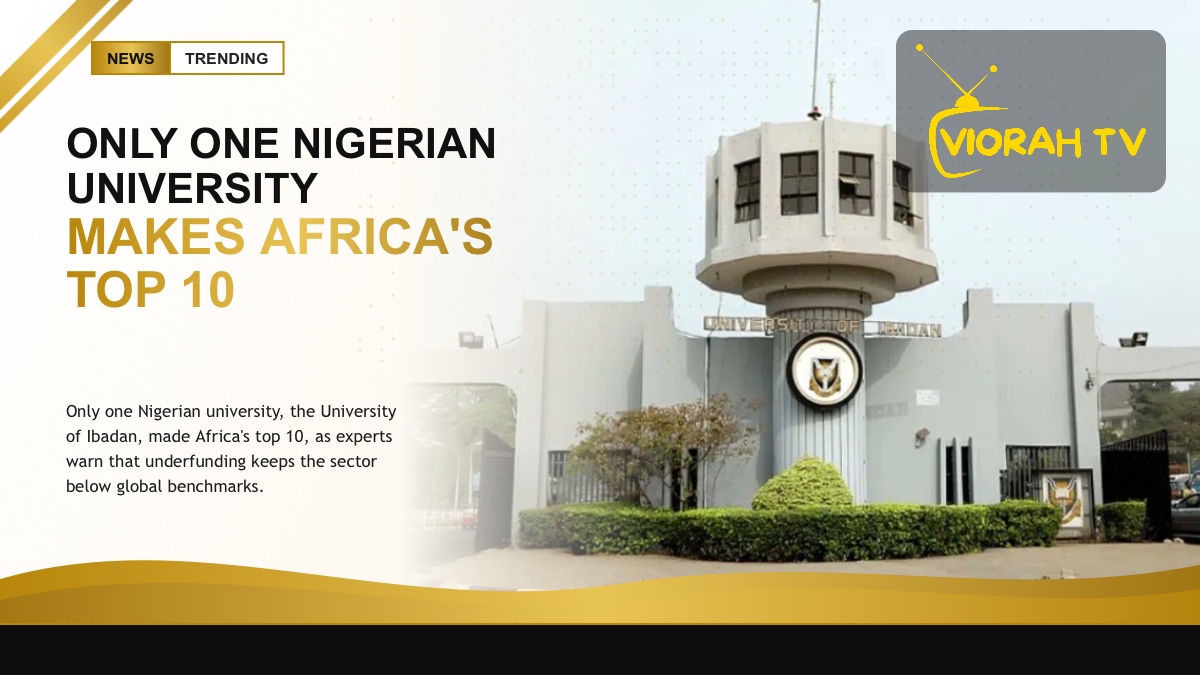
A lone Nigerian university at the top
That a country of Nigeria’s size and population should place just one institution in Africa’s top tier has prompted reflection on how its universities compete. Rankings weigh factors such as research output, teaching and international outlook, areas where sustained investment makes a difference. The University of Ibadan’s presence is a point of pride, but its solitary status underscores how much ground other Nigerian schools must make up.
The funding question
Analysts tie the sector’s struggles closely to money. In the 2026 budget, education was allocated around N3.52 trillion, equivalent to roughly 6.1 percent of total planned spending. That share falls well short of the benchmark of 15 to 20 percent that international bodies recommend for education, a gap critics say leaves universities unable to fund research, retain staff and maintain facilities to a competitive standard.
Bigger budgets, persistent problems
Experts note that even as nominal budgets rise, outcomes have not kept pace, pointing to a paradox of more spending yet stubborn weaknesses. Inflation erodes the real value of allocations, while structural challenges such as overcrowding, ageing infrastructure and brain drain compound the strain. Money alone is not the whole answer, but observers argue that adequate, well-targeted funding is a precondition for meaningful improvement.
The cost of falling behind
Weak university performance has consequences beyond league tables. It affects the quality of graduates, the research that drives innovation and the country’s ability to retain talent at home. Many students and academics seek opportunities abroad, deepening a brain drain that further weakens institutions. Reversing that cycle, experts say, requires treating higher education as a strategic investment rather than a recurring budget line.
What needs to change
Calls have grown for higher and more efficient education spending, stronger research funding and reforms to improve governance and outcomes. Closing the gap with global benchmarks would take sustained commitment across several years, not a single budget cycle. Advocates argue that without it, Nigeria risks leaving its young population underserved at a time when skills and knowledge increasingly determine national prospects.
Brain drain and the case for reform
Beyond funding, Nigeria’s universities contend with a steady outflow of talent, as academics and graduates seek better-resourced institutions and opportunities abroad. This brain drain weakens teaching and research capacity, feeding a cycle that is hard to break without serious investment and reform. Experts argue for greater institutional autonomy, stronger research funding and improved welfare to retain staff, alongside governance changes that reward quality and accountability. A country with one of the world’s largest youth populations has enormous potential in higher education, but realising it depends on treating universities as engines of national development. Without sustained commitment, the gap between Nigeria’s ambitions and its performance in global rankings is likely to persist, leaving talented young people underserved at a critical moment for the economy and society.
The ranking has reopened a familiar debate about priorities and funding in Nigerian education. Viorah TV will continue to follow developments across the country’s universities and the sector’s reform.

